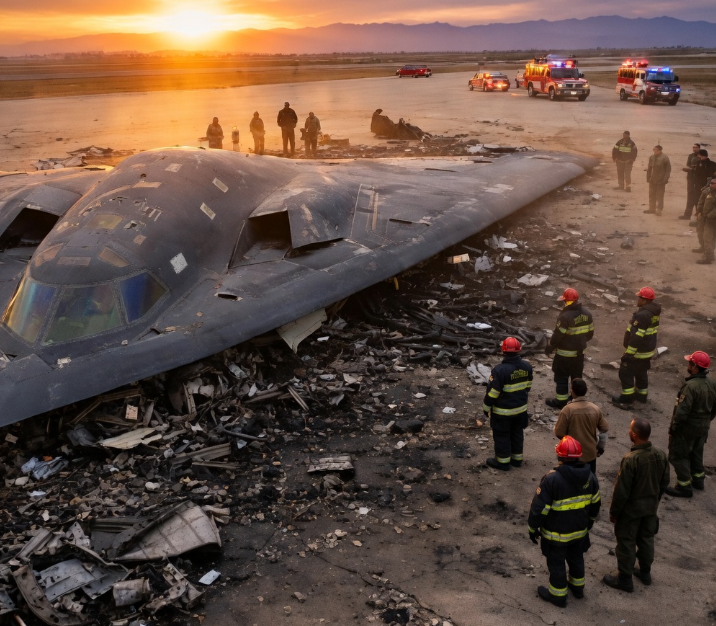
The B-2 Spirit has long occupied a unique space in the public imagination, recognized for its sleek, bat-like flying-wing design and its role as a cornerstone of the United States Air Force’s strategic arsenal. However, its shroud of secrecy has inadvertently birthed a persistent myth: the claim that a B-2 has been shot down in combat. Despite these rumors, a rigorous examination of historical records reveals that no B-2 Spirit has ever been lost to hostile fire. Instead, the few recorded incidents involving the aircraft have been the result of technical failures or operational accidents, none of which diminish its reputation as a marvel of stealth technology.
Developed by Northrop Grumman during the tail end of the Cold War, the B-2 Spirit was engineered specifically to penetrate the most sophisticated air defenses in the world. Its revolutionary design minimizes its radar cross-section through a unique shape that lacks vertical stabilizers, while advanced radar-absorbent materials further enhance its “low observability.” Unlike tactical aircraft that rely on speed or agility, the B-2 serves a strategic purpose, designed for long-range, high-altitude precision strikes against high-value, heavily defended targets. This specific mission profile often keeps the aircraft out of the public eye, contributing to an aura of mystery that serves as fertile ground for misinformation. To date, all documented losses or damages to the B-2 fleet have been non-combat related. One of the most significant events occurred on February 23, 2008, at Andersen Air Force Base in Guam. During takeoff, a B-2 experienced a critical stall and crashed. A subsequent investigation found that moisture had contaminated the aircraft’s air data sensors, causing the flight control system to receive inaccurate information. This led to a premature rotation that the pilots could not correct. While both crew members successfully ejected, the incident is frequently—and incorrectly—cited by conspiracy theorists as evidence of a secret shootdown by an unknown adversary. Another notable event took place in September 2021 at Whiteman Air Force Base in Missouri, the primary home for the B-2 fleet. During a routine landing, a B-2 sustained significant damage due to a landing gear malfunction. While the specific technical details remained classified for security reasons, the US Air Force confirmed that the incident was entirely internal and involved no hostile engagement. These accidents are often conflated with genuine combat losses, such as the 1999 downing of an F-117 Nighthawk during the Kosovo War. This historical confusion, combined with the general appeal of sensationalist headlines, keeps the myth of the “vulnerable stealth bomber” alive in online discourse. The persistence of these rumors highlights the challenge of distinguishing between an “accident” and a “combat loss.” An accident is an unintentional event caused by mechanical failure or human error, whereas a combat loss is the result of enemy action. For the B-2 Spirit, the distinction is absolute: its operational record remains untarnished by enemy fire. The aircraft’s success is a product of both its stealth design philosophy and the immense discipline of its pilots, who utilize complex route planning to avoid detection. Ultimately, the B-2 Spirit remains a testament to the effectiveness of modern aviation engineering. By relying on verified data and official military reports rather than speculation, it becomes clear that the “shot-down” narrative is a fiction. Setting the record straight ensures that public discourse regarding defense technology remains grounded in fact rather than folklore.