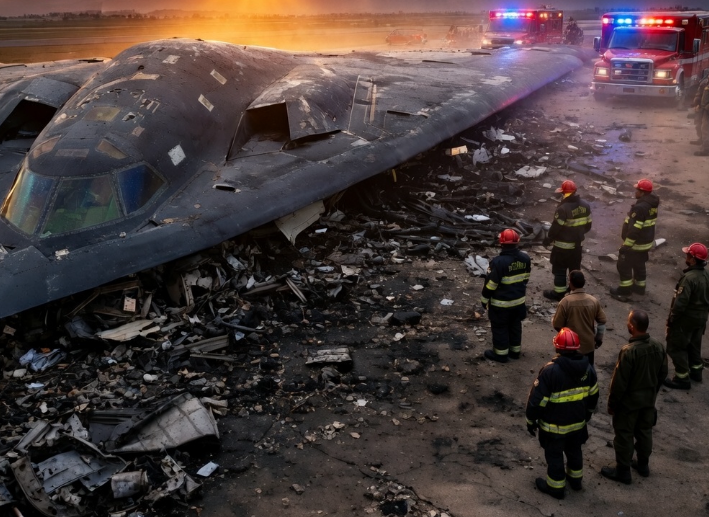
The B-2 Spirit, a strategic long-range stealth bomber developed by Northrop Grumman, stands as a pinnacle of modern aviation technology. Its iconic “flying-wing” design and specialized radar-absorbent materials were specifically engineered to penetrate heavily defended airspace by maintaining low observability. Since its inception during the late stages of the Cold War,
the aircraft has served as a cornerstone of the United States Air Force (USAF) strategic arsenal. However, its distinctive silhouette and the secrecy surrounding its missions have made it a magnet for persistent myths, most notably the unsubstantiated claim that a B-2 has been shot down by enemy forces at some point in its service history. Rigorous examination of official records and independent military investigations confirms that no B-2 Spirit has ever been lost to hostile fire. While the aircraft often operates under a veil of high-level classification, every documented instance of damage or total hull loss has been attributed to non-combat factors, such as mechanical malfunctions or environmental issues. A primary example is the 2008 crash at Andersen Air Force Base in Guam. Investigators determined the cause was moisture contamination in the aircraft’s air data sensors, which provided faulty information to the flight control system and led to an aerodynamic stall during takeoff. Another notable event occurred in 2021 at Whiteman Air Force Base in Missouri, involving landing damage during routine training operations. In both cases, the causes were internal and technical, with no external threats or hostile engagements involved. Several factors contribute to the longevity of these “shootdown” rumors, ranging from the inherent mystery of stealth operations to the sensationalist tendencies of online defense forums. Often, the public mistakenly conflates the B-2‘s history with that of the F-117 Nighthawk, which was indeed downed by a surface-to-air missile during the 1999 Kosovo War. This confusion, paired with a lack of transparency regarding specific mission parameters, allows speculative narratives to thrive. Furthermore, the appeal of sensationalism often outweighs factual reporting in public discourse, leading unverified claims to be repeated until they are incorrectly accepted as truth. Distinguishing between unintentional accidents and actual combat losses is vital for maintaining the integrity of aviation and defense analysis. The B-2 Spirit’s design philosophy—focused on stealth, operational discipline, and precision—has proven remarkably effective in evading modern detection methods. By separating myth from reality and relying on verified data from credible sources, it becomes clear that the B-2 remains one of the most resilient and successful platforms in military history. The narrative of its vulnerability is not supported by evidence; instead, its record is one of technological triumph and ongoing strategic reliability.