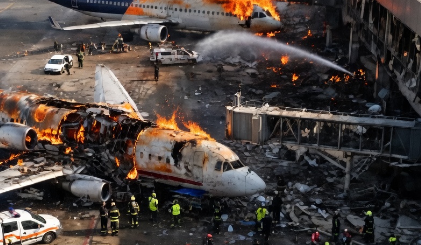
In a significant escalation of Middle Eastern hostilities, Iran has launched ballistic missiles equipped with cluster warheads at Tel Aviv. The strike, framed by Tehran as retaliation for the assassination of a high-ranking security official, resulted in at least two civilian deaths and notable infrastructure damage.
The use of cluster munitions has drawn particular alarm due to the long-term humanitarian risks posed by unexploded fragments dispersed over wide areas. This attack is part of a broader conflict that has intensified since early 2026. Iran has expanded its reach, targeting Israeli cities, U.S. bases, and allied facilities across Kuwait, Bahrain, the UAE, and Saudi Arabia. In response, Israel and the United States have conducted retaliatory airstrikes on Iranian military and nuclear infrastructure. While advanced defense systems like Iron Dome and Arrow-3 remain active, the sheer volume and technology of the incoming missiles continue to challenge complete interception. The global consequences are increasingly severe, with energy markets surging as infrastructure in the Gulf becomes a target. Despite growing international concern, diplomatic efforts have failed to secure a ceasefire. Both Israel and Iran appear committed to continued military action, leaving the region in a precarious state of heightened tension and strategic uncertainty.