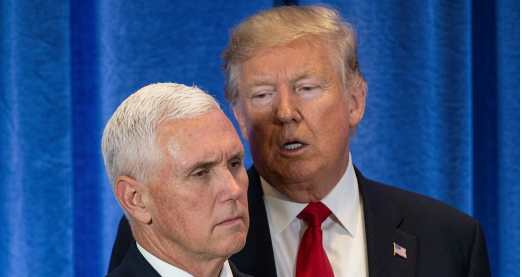
Former Vice President Mike Pence is currently navigating a precarious political tightrope as he seeks to maintain his relevance within the GOP. Despite the overwhelming dominance of the MAGA movement, Pence has positioned himself as a “constructive force” for the conservative agenda, even if that requires public disagreement with his former boss, Donald Trump. His recent media appearances highlight a growing rift between traditional Republican interventionism and the emerging isolationist tendencies within the party, as Pence attempts to hold the line on long-standing American foreign policy principles while remaining a part of the party’s future.
During a recent CNN interview with Kate Bolduan, the former Vice President expressed significant concern regarding administrative lapses at the Pentagon. Reports recently surfaced suggesting that Pete Hegseth had unilaterally paused arms supplies to Ukraine in response to Russian aggression, allegedly without the knowledge or approval of the president. Pence characterized this lack of communication as “troubling,” noting that while a massive government often sees decentralized decision-making, a policy shift of this magnitude should never bypass the Commander-in-Chief. Although he praised Trump for eventually reversing the hold and reassuring President Zelenskyy of continued support, Pence urged the administration to provide Ukraine with more than just defensive measures, advocating for robust “offensive capability” and support against aerial assaults to ensure a real peace.
This is not the first time Pence has broken ranks over the direction of U.S. foreign policy. He previously criticized Trump’s rhetoric during a high-profile speech in Saudi Arabia, where the president attacked the legacy of American interventions in the Middle East. Trump had characterized past military actions as the failures of “nation-builders” who wrecked complex societies they did not understand. Speaking to NBC’s “Meet the Press,” Pence countered that such remarks were a “disservice” to generations of veterans who served in Iraq and Afghanistan. He expressed a fundamental disdain for American leaders criticizing their own country’s history while on foreign soil, particularly in a location with the historical weight of Riyadh, where many of the 9/11 hijackers originated.
Ultimately, Pence’s strategy involves a delicate balancing act: supporting the broader conservative agenda while acting as a formal check on the president’s more radical shifts. By addressing the GOP’s shifting stance on global leadership and military engagement, Pence is attempting to preserve a version of conservatism that values international stability and traditional alliances. Whether this approach will allow him to remain a viable leader in a party increasingly defined by Trump’s personal brand remains to be seen, but his willingness to challenge the administration marks him as a significant, if isolated, voice in Washington today.