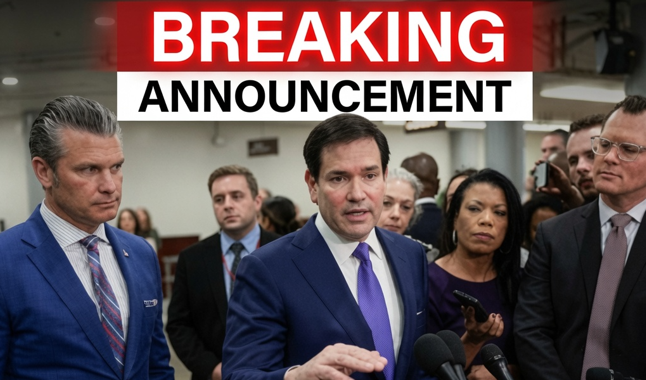
U.S. Secretary of State Marco Rubio said Friday that quiet diplomatic efforts aimed at reducing tensions involving the United States, Israel, and Iran have shown modest signs of progress. While describing the developments as encouraging, Rubio cautioned that the movement remains limited and far from guaranteeing a breakthrough.
Speaking about the ongoing negotiations, Rubio emphasized that Washington is carefully monitoring the situation but does not want to create unrealistic expectations. He noted that there has been “a little bit of movement” in recent discussions, describing it as a positive step while making clear that substantial obstacles remain. According to Rubio, the United States is encouraged by any progress that reduces the risk of escalation but is not yet ready to celebrate.
The secretary stressed that diplomacy still offers a possible path forward, though he warned that opportunities for a negotiated solution may not last forever. He indicated that all parties involved face important decisions in the coming weeks and that continued engagement will be necessary to prevent tensions from worsening.
Meanwhile, Pakistan has reportedly resumed its role as an intermediary between Washington and Tehran. Security sources say that Syed Asim Munir, Pakistan’s Army Chief and Field Marshal, is expected to travel to Tehran for discussions with Iranian officials. The visit is viewed as part of Islamabad’s broader effort to maintain communication channels and encourage dialogue between the United States and Iran at a time of heightened regional uncertainty.
One of the most significant disagreements reportedly under discussion involves Iran’s proposed “tolling system” for vessels passing through the Strait of Hormuz. Rubio rejected the concept, arguing that such a measure would be unacceptable and could jeopardize any diplomatic gains achieved through recent talks. U.S. officials have expressed concern that restrictions or additional costs imposed on shipping through the strategic waterway could disrupt international trade and increase instability in global energy markets.
The Strait of Hormuz remains one of the world’s most critical maritime routes. Roughly one-fifth of global oil shipments pass through the narrow passage connecting the Persian Gulf to international waters. Because of its importance to energy supplies and global commerce, any threat to navigation in the strait is closely watched by governments, businesses, and financial markets worldwide.
For now, diplomats appear focused on preserving momentum in the negotiations, even as major disagreements continue to stand in the way of a broader agreement.