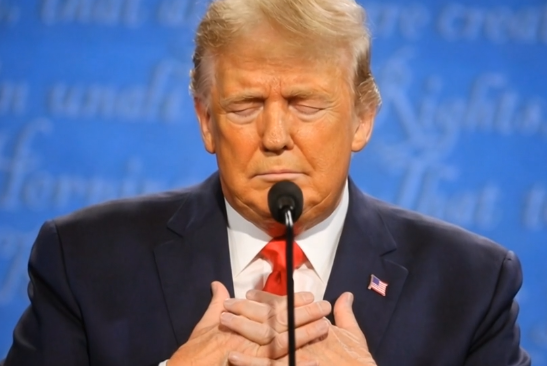
President Donald Trump is currently grappling with a significant political crisis as a high-stakes strategy meeting at the White House involving senior Republican leaders fell apart this week. The breakdown occurred following a wave of internal backlash against a controversial $1.8 billion compensation fund intended for individuals prosecuted in connection with the events of Jan. 6. While the president maintains the fund is a necessary tool to provide restitution for those who suffered under “political targeting” during the Joe Biden administration, many within his own party have characterized the initiative as a “slush fund.” This internal friction has not only stalled a major legislative package but has also exposed a deepening rift between the executive branch and GOP lawmakers over the legal implications of the Capitol riot.
The immediate victim of this disagreement was a critical $70 billion immigration enforcement package, which is seen as the centerpiece of Trump’s border security and mass deportation agenda through 2029. During a tense, closed-door session, acting Attorney General Todd Blanche attempted to defend the proposal but met stiff resistance. Republicans such as Sens. Katie Britt and Tommy Tuberville of Alabama—usually reliable supporters—confronted Blanche over the specifics of the fund. Their primary concern revolves around the possibility that taxpayer money could be distributed to individuals convicted of violent offenses, including those who assaulted police officers. The inability to resolve these concerns led many lawmakers to declare the current legislation effectively dead for the week.
In response to the chaos, Senate Majority Leader John Thune took the step of canceling all remaining votes and sending lawmakers home until June 1. This move puts the Senate on a trajectory that misses Trump’s preferred deadline for passing the reconciliation bill. Thune signaled that the White House must assuage the fears of concerned members before any progress can be made. The sentiment of the broader caucus was echoed by Sen. Lisa Murkowski of Alaska, who likened the compensation fund to a “bomb” dropped in the middle of a delicate legislative process. Meanwhile, Sen. John Curtis of Utah expressed a fundamental opposition to the fund itself, indicating that the resistance is not just about details but the core principle of the program.
The controversial fund stems from a legal settlement between the Justice Department and Donald Trump following a $10 billion lawsuit. The resulting $1.8 billion fund is designed to offer financial compensation to those claiming they were victims of politically motivated prosecutions. However, the scope of the fund is immense, with reports suggesting that more than 1,600 individuals connected to the Jan. 6 Capitol riot—specifically those who later received presidential pardons—could be eligible. While the administration insists the money is not for those “rightfully convicted of violence,” the lack of explicit guardrails has left many lawmakers skeptical of how the funds will be allocated in practice.
Further complicating the situation are reports of provisions within the agreement that would shield Donald Trump and his sons from certain Internal Revenue Service (IRS) audit actions. This discovery provoked a reaction from Rep. Brian Fitzpatrick, who pledged to fight these protections through legislative channels. Additionally, the relationship between Trump and Senate leadership has been further strained by the president’s recent endorsement of Ken Paxton in Texas, viewed as a challenge to the GOP establishment. As the party heads toward the 2026 midterms, these tensions over spending and the rule of law suggest a difficult road ahead for unified governance.