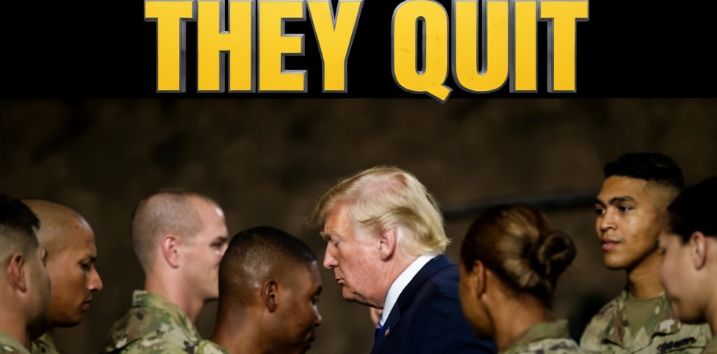
At 4:00 a.m., reports of an unprecedented military walkout began to surface, casting a shadow over the already volatile relationship between the United States and Iran. While official confirmation is still pending, the rumor of service members refusing duty highlights a profound internal strain within the American defense apparatus. This development occurs against a backdrop of intensifying rhetoric, largely fueled by statements from Donald Trump regarding the potential targeting of civilian infrastructure in Iran. These targets—including power facilities and bridges—represent a significant escalation that has alarmed both legal scholars and humanitarian organizations worldwide.
Legal experts are sounding the alarm, asserting that large-scale attacks on systems essential for civilian life may violate international law and established wartime conventions. Strategically, the proposed actions are viewed as high-risk; history suggests that destroying a nation’s infrastructure rarely yields the intended military results. Instead, such actions often spark intense nationalist resistance and solidify domestic support for the targeted regime, thereby complicating any future diplomatic solutions. The fear among analysts is that a strategy intended to project strength may inadvertently create a more unified and resilient adversary. The political fallout in Washington has been immediate. Chris Van Hollen and other prominent lawmakers have condemned the aggressive posture as “reckless,” warning that it lacks a coherent strategic roadmap. There is also a growing sense of urgency within Congress, where some fear that the executive branch’s decisions are outpacing legislative oversight. Historically, the power to authorize military action serves as a crucial check, but the fast-moving nature of this crisis threatens to bypass traditional parliamentary debate and funding restrictions, potentially leading to unauthorized escalation. Beyond the domestic sphere, the geopolitical consequences of this friction are immense. Analysts point out that Tehran has shown little inclination to retreat under duress. Threats from external powers typically reinforce hardline positions within the Iranian leadership, making de-escalation nearly impossible through military pressure alone. Furthermore, the absence of a clearly defined exit strategy remains a major point of contention. Without a structured endgame, the risk of being drawn into a protracted conflict—one that drains resources and costs lives—becomes a distinct and dangerous possibility for all actors involved. In the current climate, the priority for global diplomats is the prevention of a total breakdown in communication. Reports suggest that back-channel negotiations are currently underway to find a path toward de-escalation. Because perception is often as impactful as reality, a single decision or miscalculation could redraw the map of global security. As the world watches, the ultimate question remains whether the fragile balance of power and restraint can be maintained, or if the region will be plunged into a new era of instability.