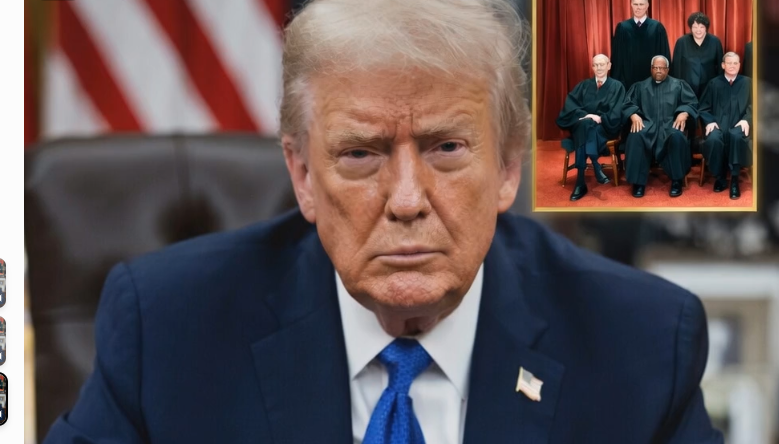
In a historic and unanimous 9-0 decision, the United States Supreme Court has fundamentally reshaped the legal landscape of immigration enforcement in the case of Urias-Orellana v. Bondi.
Delivering the opinion for the Court, Justice Ketanji Brown Jackson asserted that federal appellate courts must strictly adhere to a “deferential standard of review” when scrutinizing decisions made by the Board of Immigration Appeals (BIA). This ruling marks a significant triumph for Attorney General Pam Bondi and the Trump administration, effectively stripping lower courts of the power to second-guess factual determinations regarding asylum and deportation, thereby reinforcing national sovereignty and the rule of law. The legal crux of the ruling centers on the “substantial-evidence standard” as defined under the Immigration and Nationality Act (INA). The High Court clarified that factual findings established by the BIA are to be considered “conclusive” unless a situation arises where any reasonable adjudicator would be “compelled to conclude to the contrary.” By reaffirming the 1992 precedent of INS v. Elias-Zacarias, Justice Jackson noted that the statutory intent is to “truncate” judicial review. This high evidentiary bar ensures that the expert determinations of immigration judges are shielded from the political leanings of appellate panels, preventing the court system from being overwhelmed by frivolous appeals that delay the removal of unqualified applicants. The specific case involved Douglas Humberto Urias-Orellana and his family, who fled El Salvador in 2021 citing threats from a “sicario,” or professional hitman. While the family sought asylum based on these threats, an immigration judge and the BIA determined that they had successfully relocated within their home country to avoid danger before traveling to the United States. Because the law stipulates that asylum is reserved for those who cannot avoid persecution through internal relocation, the BIA upheld their removal in 2023. The Supreme Court’s final ruling resolves a previous circuit split, emphasizing that for an agency’s determination to be reversed, the evidence must be so compelling that no reasonable factfinder could fail to find a requisite fear of persecution—a standard the family failed to meet. Attorney General Pam Bondi has hailed the victory as a “permanent legal shield” for the Department of Justice (DOJ) and a cornerstone of the administration’s “Law and Order” agenda. For years, the deportation mission has been hindered by “de novo” reviews where appellate courts re-examined evidence to reach different conclusions than the BIA. This 9-0 sweep ensures that when a deportation order is issued, it will be enforced with the full weight of the law. The 119th Congress has also welcomed the decision, seeing it as judicial validation for upcoming security measures like the SAVE America Act, which aims to protect the American taxpayer from the costs associated with a fractured border. As the nation looks toward the 2026 midterms, this ruling is being viewed as a fulfillment of the 2024 mandate. The unanimity of the decision—including the court’s liberal wing—signals a broad judicial recognition that the integrity of the BIA must be maintained to ensure a functioning immigration system. Beyond immigration, the ruling is framed as part of a larger success story for the Trump-GOP platform, coinciding with 5% GDP growth and five-year low gas prices. By deferring to administrative experts and upholding the plain meaning of the law, the Supreme Court has provided a sense of stability and trust in the American legal system, ensuring that the nation’s borders remain sovereign and respected.