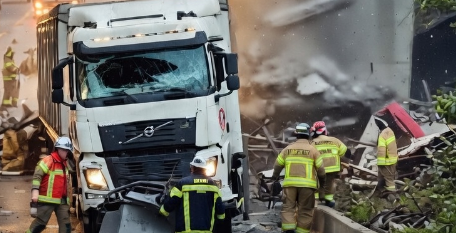
A calm Friday morning in Richmond, British Columbia was abruptly interrupted when a commercial truck struck the Cambie Road overpass along Knight Street.
The collision, which took place around 7:15 a.m., resulted in the immediate closure of all southbound lanes and triggered an emergency structural inspection of the bridge. Investigators determined that the vehicle’s dump trailer had been left in a raised position, causing it to smash into the concrete span and become lodged while the cab was separated and came to a stop further down the road. Fortunately, no injuries were reported, but the high-impact incident caused massive logistical delays throughout the Lower Mainland. In the aftermath, specialized structural engineers were called to the scene to assess the bridge’s integrity. Although the structure remained standing, officials emphasized that internal stress or weakened supports are not always visible to the naked eye. This cautious approach meant that one of the region’s busiest transit corridors remained paralyzed for hours as crews worked to remove the trailer and clear debris. This event is not an isolated occurrence; rather, it is part of a recurring pattern of over-height vehicle strikes that have plagued the province in recent years, highlighting a significant gap in road safety protocols. Critics and industry analysts point to a combination of human error and systemic failures as the root causes of these accidents. While driver negligence—specifically the failure to perform pre-trip inspections or lower dump beds—is often the immediate trigger, the role of aging infrastructure and inadequate signage cannot be ignored. To prevent future occurrences, experts are advocating for the installation of advanced over-height detection sensors and more rigorous training for commercial operators to ensure they are fully aware of their vehicle’s dimensions before departing. The economic impact of such disruptions is profound. Knight Street is a primary artery for freight movement, and even a temporary closure places immense strain on supply chains, increases fuel costs, and disrupts local businesses. This latest crash serves as a compelling argument for a coordinated strategy involving government agencies and the trucking industry. By investing in better technology and stricter enforcement of safety standards, the province can protect its critical infrastructure. Ultimately, the Richmond collision underscores how a single oversight can lead to far-reaching consequences for the entire community.