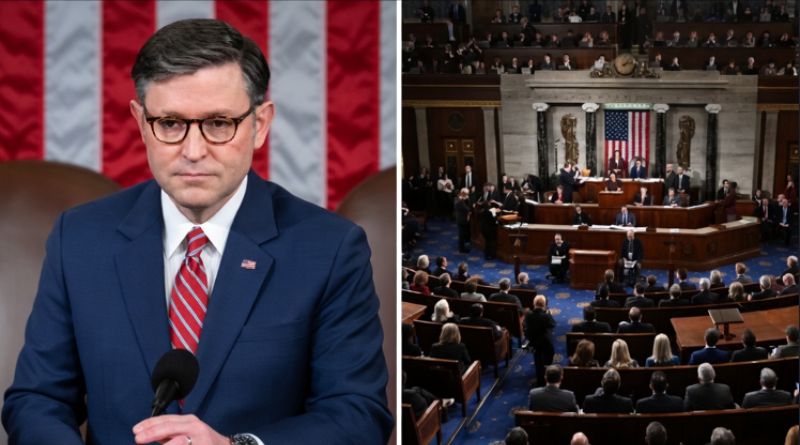
The House is poised to approve legislation on Thursday that would extend enhanced Affordable Care Act (ACA) tax credits for three years, delivering a significant political victory for Democrats while also encouraging centrist Republicans who see the vote as a pathway toward a broader bipartisan compromise.
Despite likely passage in the House, the proposal faces steep challenges in the Senate. A nearly identical measure failed there in December after being blocked by Republicans. Even so, the anticipated House vote has reignited negotiations among a bipartisan group of senators working to craft a revised plan capable of gaining support in both chambers.
Moderate Republicans in the House—particularly those who broke with party leadership to force the vote through a discharge petition—believe strong bipartisan backing could pressure the Senate to act. Representative Mike Lawler (R-N.Y.), one of four Republicans who supported the procedural move, said he expects “a substantial number of Republicans” to support the bill as a signal that compromise is achievable.
Lawler noted that ongoing discussions with senators have already begun to coalesce around a more limited extension paired with policy changes. He pointed to a two-year renewal with targeted reforms as a realistic outcome. According to Lawler, that framework reflects months of behind-the-scenes negotiations and could represent the most viable path forward.
The debate over expanded ACA subsidies has stretched on for months, reflecting deeper ideological divisions over the federal government’s role in health care. The issue was a major factor in last fall’s 43-day government shutdown, underscoring its political sensitivity and the difficulty lawmakers face in reaching agreement.
Without congressional action, an estimated 22 million Americans who rely on these subsidies could see their health insurance costs rise significantly in the early part of the year. That looming impact has intensified pressure on lawmakers, particularly moderate Republicans, to address the issue quickly.
Democrats, meanwhile, are highlighting the potential consequences as part of their broader political strategy ahead of the November elections. They argue that failure to extend the subsidies would leave millions facing higher costs and could become a major liability for Republicans at the ballot box.
Representative Marc Veasey (D-Texas) emphasized the urgency, suggesting that the administration would struggle to deflect criticism if relief is not provided. His comments reflect a wider Democratic effort to frame the issue as both an economic and political risk for the GOP.
The situation also exposes ongoing divisions within the Republican Party. While moderates are pushing for a negotiated solution, many conservatives have argued that the enhanced subsidies—originally enacted during the COVID-19 pandemic under former President Biden—should be allowed to expire permanently. They contend that the temporary measure has outlived its purpose and contributes to excessive government spending.
Several contentious policy questions remain unresolved in the negotiations. Chief among them is the issue of abortion coverage in ACA marketplace plans. Republicans are demanding stricter adherence to the Hyde Amendment, which prohibits federal funds from being used for abortion services. Although some plans include such coverage, Democrats and moderates maintain that these costs are paid for with state or private funds, not federal dollars.
This disagreement has become a central obstacle, with Democrats rejecting additional restrictions as unnecessary and potentially harmful to coverage access. However, recent signals from President Trump have given moderates hope that a compromise may be within reach. In a speech earlier this week, Trump urged House Republicans to show “flexibility on Hyde,” suggesting openness to negotiation.
Beyond the abortion issue, Senate Republicans are also seeking broader reforms to the subsidy system. Senate Majority Leader John Thune (R-S.D.) has called for implementing income limits on eligibility, arguing that assistance should be more tightly targeted. He has also proposed eliminating $0-premium plans, which some lawmakers say contribute to automatic enrollments that leave consumers unaware they are insured.
Additionally, Thune has advocated for policies that would reduce incentives for insurers to benefit from passive enrollments, as well as measures to promote health savings accounts (HSAs). His proposal includes creating a “bridge” to HSAs, with the goal of shifting more financial control to consumers rather than insurance companies.
Ultimately, the fate of the legislation will depend on whether lawmakers can reconcile these competing priorities. The outcome will not only shape the future of ACA subsidies but could also have significant political implications as both parties look ahead to the midterm elections.