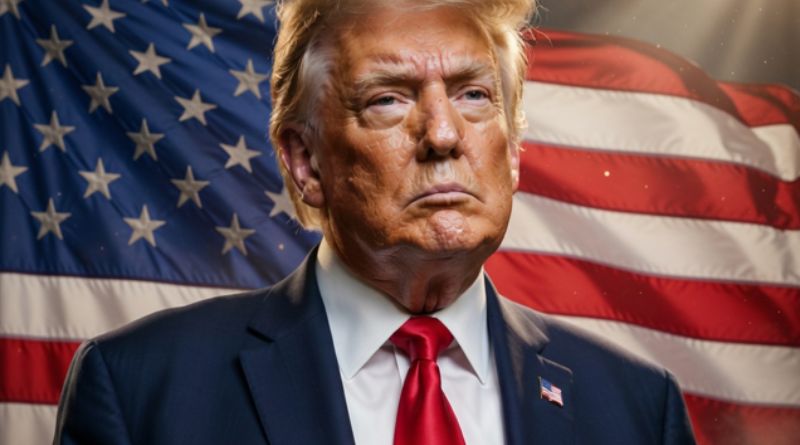
President Donald Trump’s executive order signed on March 8, 2026, has triggered intense national and international debate by targeting international students who participate in protests labeled as “anti-Israel.” The directive instructs federal agencies to revoke visas and deport non-citizen students found to be involved in such activities, marking a significant shift in how immigration law intersects with political expression on U.S. campuses.
The administration presents the policy as a necessary response to rising concerns about anti-Semitism, particularly within universities. Officials argue that some demonstrations tied to the Israeli-Palestinian conflict have crossed the line from political protest into harassment or hostility toward Jewish students. In this view, the executive order is designed to ensure campuses remain safe and inclusive environments for all students.
Under the order, international students face consequences that do not apply to U.S. citizens. While American students retain full First Amendment protections, non-citizens studying in the United States are subject to immigration rules that can be enforced more strictly. A finding of “anti-Israel” activity could result in immediate visa revocation, expedited deportation proceedings, and, in some cases, a long-term or permanent ban on reentry into the country.
One of the most controversial aspects of the policy is its broad definition of anti-Semitism. Critics argue that the definition may include certain criticisms of the Israeli government, potentially blurring the line between protected political speech and prohibited conduct. This ambiguity has raised concerns about how the policy will be applied in practice and who ultimately decides what qualifies as a violation.
The order also places pressure on universities themselves. Institutions that fail to address or prevent such protest activity risk losing federal funding, a measure that could have serious financial consequences. As a result, many universities are reassessing their policies on demonstrations and student conduct, with some considering stricter regulations to avoid potential penalties.
Supporters of the executive order emphasize that studying in the United States is a privilege, not a guaranteed right. They argue that the government has the authority to set expectations for behavior, especially when it comes to protecting minority groups from discrimination. From this perspective, the policy is seen as a firm but justified step to confront a real and growing problem on college campuses.
However, civil rights organizations, legal experts, and academic leaders have voiced strong opposition. Groups such as the American Civil Liberties Union contend that the order risks undermining fundamental principles of free speech by punishing individuals for their political views. They warn that the threat of deportation could create a chilling effect, discouraging international students from participating in peaceful protests, academic discussions, or public debate.
Concerns about due process have also been raised. Immigration proceedings often provide fewer protections than criminal courts, and critics worry that students could face severe consequences without adequate opportunity to defend themselves. The possibility of inconsistent or politically influenced enforcement further adds to these fears.
On campuses across the country, the impact is already becoming visible. International students report feeling increasingly cautious about expressing their views on sensitive geopolitical issues. Some are avoiding protests or public events altogether, while others are reconsidering whether to study in the United States at all. University administrators, meanwhile, are caught between maintaining open academic environments and protecting their institutions from federal scrutiny.
The policy has also drawn significant attention abroad. Human rights organizations and foreign governments have questioned whether the order aligns with the United States’ longstanding reputation as a champion of free expression. In some cases, officials have advised students to carefully weigh the risks before pursuing education in the U.S.
Legal challenges to the executive order are expected to play out in federal courts, where judges will examine its compatibility with constitutional protections and existing immigration law. At the same time, members of Congress remain divided, with some supporting the administration’s approach and others seeking to limit or overturn it through legislation.
As the debate continues, the executive order highlights a deeper tension between efforts to combat discrimination and the need to safeguard open discourse. For international students, the policy introduces new uncertainties about the boundaries of acceptable speech and the potential consequences of crossing them in an increasingly complex political landscape.