The U.S. Supreme Court has allowed the federal government to freeze more than $4 billion in foreign aid payments that President Donald Trump sought to cancel last month through a rarely used budget maneuver known as a “pocket rescission.”
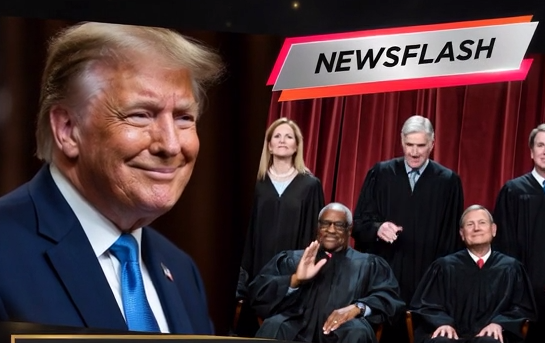
In a 6–3 decision, the Court granted the Trump administration’s emergency appeal, effectively pausing a lower court ruling that had ordered the release of the previously appropriated funds. The ruling represents a significant, though temporary, victory for the administration as the broader legal questions surrounding the move continue to unfold. In its order, the Court’s majority concluded that the potential harm to the Executive Branch’s ability to conduct foreign affairs outweighed the risks claimed by the organizations challenging the funding freeze. Those groups include the AIDS Vaccine Advocacy Coalition, the Journalism Development Network, the Center for Victims of Torture, and the Global Health Council. However, the justices stopped short of deciding the larger constitutional question of whether a president has the authority to unilaterally withhold or “impound” funds that Congress has already approved.
President Trump previously notified House Speaker Mike Johnson of his intent to cancel more than $4 billion in foreign aid, including $3.2 billion allocated to programs run by the U.S. Agency for International Development (USAID), $322 million from the joint USAID–State Department Democracy Fund, and $521 million in State Department contributions to international organizations. Because the request was submitted close to the Sept. 30 fiscal-year deadline, it could take effect without congressional action.
The maneuver marks the first use of a pocket rescission by a president in nearly 50 years.
Earlier, U.S. District Judge Amit Mehta ruled that the administration could not withhold the funds without formal congressional approval, citing the Impoundment Control Act.
Justices Elena Kagan, Sonia Sotomayor, and Ketanji Brown Jackson dissented from the Supreme Court’s ruling, warning of broader implications for executive authority and congressional oversight.