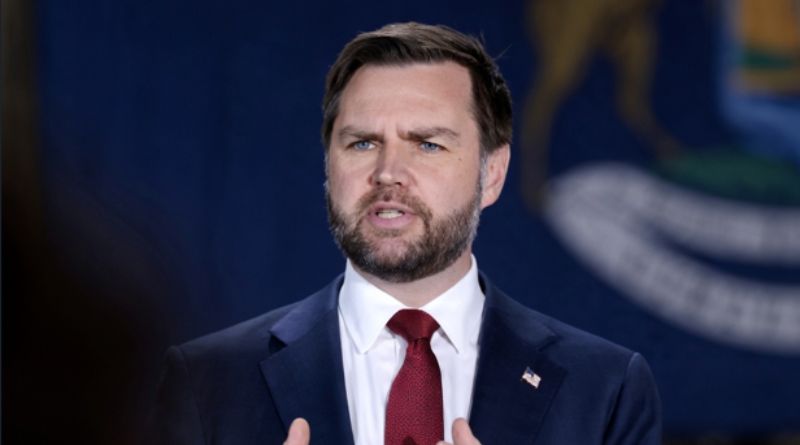
Although Donald Trump remains the Democratic Party’s প্রধান রাজনৈতিক opponent, a growing number of Democratic leaders are beginning to shift their focus toward Vice President JD Vance as a likely future rival. This evolving strategy reflects a broader recognition that Vance could emerge as a leading figure in Republican politics, particularly in a post-Trump landscape.
A recent example of this dynamic unfolded when Kentucky Governor Andy Beshear traveled to Butler County, Ohio, where Vance was raised. Speaking at a Democratic fundraiser, Beshear criticized Vance’s memoir, Hillbilly Elegy, arguing that it portrayed Appalachian communities in a negative and overly simplistic way. He suggested the book reinforced stereotypes and questioned Vance’s authenticity and connection to the region. Vance, however, has long maintained that the memoir is a personal account of his upbringing and the struggles faced by his family and community.
Beshear’s remarks are part of a broader trend among Democrats who appear to be positioning themselves for future national campaigns. Political strategist Lis Smith noted in comments to The Associated Press that Democrats are increasingly looking ahead to the next generation of Republican leadership. She described Vance as a leading contender for the 2028 Republican presidential nomination and argued that Democrats should begin shaping public perceptions of him well before the next election cycle intensifies.
Vance’s supporters have dismissed such criticism as politically motivated. Taylor Van Kirk, a spokesperson for the vice president, responded by suggesting that attacks from figures like Beshear are primarily aimed at gaining national attention rather than offering substantive critiques.
Other prominent Democrats have also taken aim at Vance. Representative Ro Khanna of California delivered speeches in both Ohio and at Yale University, where he and Vance attended law school, presenting Vance as more ideologically hardline than Trump. Meanwhile, Pennsylvania Governor Josh Shapiro criticized Vance’s economic messaging, arguing that it does not adequately address the needs of working-class Americans.
According to Democratic strategists, engaging with Vance now serves multiple purposes. It allows potential presidential candidates to raise their national profiles while also testing arguments that could be used in a future general election. These early confrontations may offer a preview of how Democrats plan to challenge Vance if he ultimately secures the Republican nomination.
Vance’s political identity is closely tied to his personal story. Raised in Middletown, Ohio, he rose to national prominence with the publication of Hillbilly Elegy in 2016. The book explored themes of economic hardship, cultural identity, and social mobility in working-class communities, helping to position Vance as an interpreter of the voters who helped propel Trump to victory.
He carried that profile into his successful 2022 Senate campaign and later into the vice presidency. His background and messaging are expected to remain central to any future presidential bid, particularly as he seeks to maintain support among working-class voters.
Polling data suggests that Vance currently holds an early advantage in the race for the 2028 Republican nomination, though the field remains fluid. A recent Center Square Voters’ Voice Poll found that 36% of Republican and Republican-leaning respondents supported Vance as their preferred candidate. Donald Trump Jr. followed with 19%, while 14% of respondents said they were undecided. At the same time, Secretary of State Marco Rubio has gained ground in recent months, indicating that competition within the party is likely to intensify as the next election cycle approaches.