In modern warfare, few weapons inspire as much fear and strategic significance as bunker-buster bombs. Designed to penetrate deep beneath the earth’s surface before detonating, these weapons are built to destroy targets once considered nearly invulnerable. While dramatic accounts sometimes exaggerate their impact, the reality of their role in contemporary military strategy is both complex and consequential.
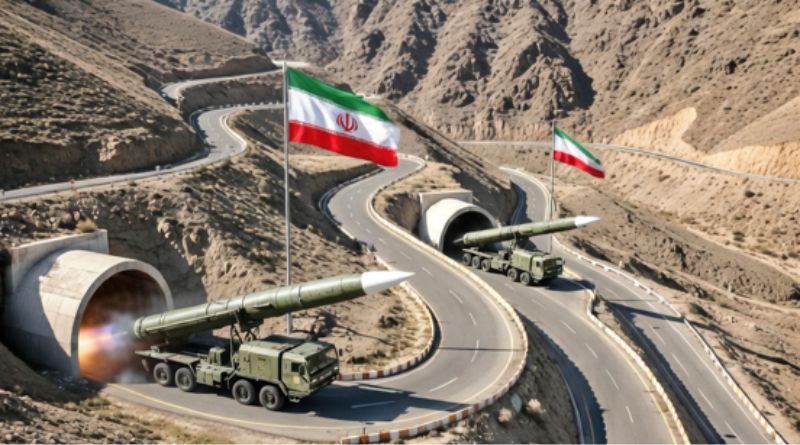
In recent years, attention has increasingly focused on how advanced airpower—particularly long-range bombers like the U.S. B-2 Spirit—could be used in a hypothetical large-scale strike against hardened underground facilities. This discussion is especially relevant when considering countries like Iran, which has invested heavily in fortified military infrastructure. Often referred to as “missile cities,” these underground networks are designed to shield critical assets such as ballistic missiles, command centers, and storage facilities from conventional attacks.
The development of weapons like the GBU-57 Massive Ordnance Penetrator (MOP) represents a direct response to such defenses. Weighing approximately 30,000 pounds, the MOP is capable of burrowing deep into reinforced concrete and rock before exploding. Its purpose is not widespread destruction across open areas, but rather the precise elimination of deeply buried, high-value targets. Delivered primarily by stealth bombers, these weapons rely on both technological sophistication and accurate intelligence to be effective.
However, even the most advanced bunker-busters are not a guaranteed solution. Their success depends heavily on precise targeting, detailed knowledge of underground layouts, and the depth and construction of the facilities in question. In many cases, nations design these complexes with multiple layers, redundancies, and deceptive structures, making it difficult to ensure complete destruction. As a result, military planners must weigh the potential effectiveness of such strikes against the risks of escalation and incomplete results.
Another defining feature of modern military operations is the integration of multiple domains. A potential strike on hardened facilities would likely involve not only airpower, but also cyber operations aimed at disabling air defense systems and disrupting communications. This level of coordination reflects a broader shift in warfare, where success depends on the seamless combination of technology, intelligence, and timing. Rather than relying on sheer force alone, modern strategies emphasize precision and synchronization.
Beyond the physical damage, the psychological dimension of such capabilities cannot be overlooked. The mere existence of weapons capable of reaching underground strongholds can influence the behavior of adversaries. Deterrence, in this sense, is as much about perception as it is about actual use. Demonstrating the ability to strike hardened targets may discourage aggression, but it can also push rivals to adapt, investing in even deeper or more concealed infrastructure.
The geopolitical implications of these developments are significant. Any real-world use of bunker-buster weapons against a country like Iran would likely trigger far-reaching consequences, including regional instability, economic disruption, and potential retaliation through both conventional and asymmetric means. The Middle East, already a region of delicate balances, could face heightened tensions and uncertainty in the aftermath of such actions.
At the same time, the role of media and information in shaping public understanding of military events has grown dramatically. In an age of instant communication, reports—accurate or otherwise—can spread rapidly, influencing perceptions and fueling debate. This makes it increasingly important to distinguish between verified information and speculative or exaggerated claims.
Ultimately, the evolution of weapons like bunker-busters highlights a broader transformation in warfare. Technology has expanded the range of what is possible, but it has also introduced new risks and ethical considerations. As nations continue to develop and refine these capabilities, the challenge will be not only how they are used, but how their existence shapes the decisions of leaders and the stability of the global order.