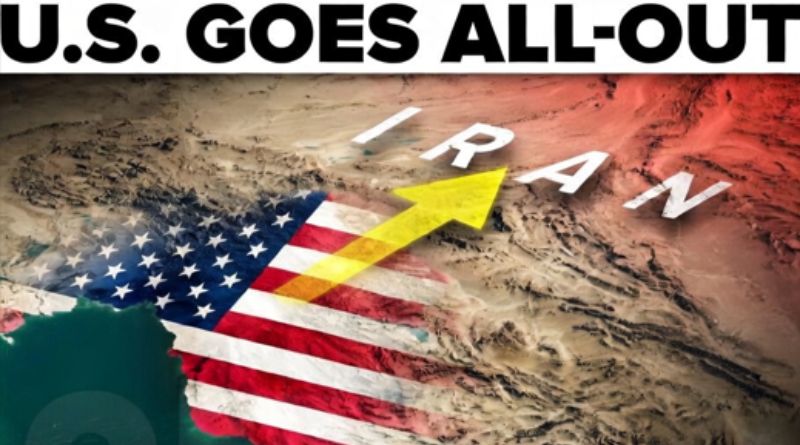
Tensions between the United States and Iran continue to command global attention, shaped by decades of political friction, strategic rivalry, and mutual suspicion. While headlines and online discussions often frame the situation in dramatic or definitive terms, the reality is far more nuanced. Decisions on both sides tend to be cautious, calculated, and influenced by a wide range of regional and international factors. At the heart of current concerns is Iran’s nuclear program. International organizations, particularly the International Atomic Energy Agency, have closely monitored Iran’s uranium enrichment activities for years. Although Iran insists its program is intended for peaceful purposes such as energy production, enrichment levels beyond typical civilian needs have raised concern among Western governments. This uncertainty keeps the issue central to diplomatic negotiations and strategic planning.
Military scenarios are frequently discussed, especially the potential use of airpower. Modern air forces provide the ability to conduct precision strikes, gather intelligence, and project strength without deploying large numbers of ground troops. However, much of the speculation circulating online about specific operations or large-scale destruction lacks independent verification. In practice, military posturing often serves as a form of deterrence and signaling rather than a prelude to full-scale conflict. Some discussions also explore the possibility of special operations missions targeting nuclear facilities. These scenarios, often involving elite units, are considered highly complex and risky. Facilities such as Fordow and Natanz are heavily fortified, with some located deep underground. Any attempt to access or secure them would require precise intelligence, coordination across multiple forces, and the ability to manage hazardous materials under extreme conditions. For these reasons, such operations are generally viewed as last-resort options. Geography further complicates potential military action. Many key Iranian sites are located far from coastlines and embedded within difficult terrain. Even if initial objectives were achieved, maintaining control would present additional challenges, including securing surrounding areas, sustaining supply lines, and defending against counterattacks. These realities make prolonged ground engagements unlikely without significant escalation.
The Strait of Hormuz also plays a crucial role in strategic calculations. As one of the world’s most important النفط transit routes, it carries a substantial share of global oil shipments. Any disruption could quickly impact global energy markets and economic stability. Naval forces in the region often focus on ensuring freedom of navigation and deterring potential threats to commercial shipping. In addition to military considerations, the information environment has become increasingly influential. Misinformation can spread rapidly, sometimes amplified by altered or misleading content. This makes it essential for observers to rely on credible sources and approach sensational claims with caution. Despite persistent tensions, most experts agree that a full-scale conflict remains unlikely due to the high costs and unpredictable consequences. Instead, strategies tend to emphasize limited objectives, deterrence, and maintaining leverage for diplomacy. Ultimately, the situation between the United States and Iran remains fluid and complex. While risks persist, so do diplomatic pathways and efforts to manage escalation. Understanding this balance is key to interpreting developments realistically and avoiding conclusions driven more by speculation than by evidence.