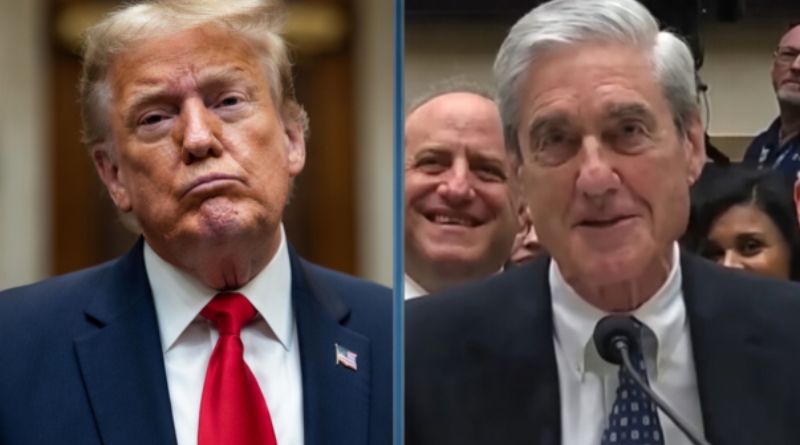
Robert Mueller, the former FBI Director who later served as special counsel overseeing the investigation into Russian interference in the 2016 U.S. presidential election, has died at the age of 81. His passing was confirmed by his family on Friday. Mueller had been living with Parkinson’s disease since at least 2021, a diagnosis his family publicly disclosed. In recent years, the progressive illness affected his speech and mobility, limiting his public appearances and forcing him to cancel planned congressional testimony. As of now, no official cause of death has been released.
“With deep sadness, we are sharing the news that Bob passed away last night,” the family said in a statement reported by The New York Times. “His family asks that their privacy be respected.” Mueller’s legacy is closely tied to his role as special counsel from 2017 to 2019, when he led a wide-ranging investigation into Russian efforts to influence the 2016 election and whether individuals associated with Donald Trump’s campaign coordinated with those efforts. The inquiry produced a detailed report concluding that Russia interfered through hacking operations and a coordinated disinformation campaign. However, the investigation did not establish that members of the Trump campaign conspired or coordinated with the Russian government in those efforts. The report documented numerous contacts between campaign associates and Russian figures but stated that the available evidence did not meet the standard required to bring conspiracy charges.
The probe resulted in multiple indictments and convictions, including charges involving false statements, obstruction, and financial crimes uncovered during the investigation. Supporters of the inquiry viewed these outcomes as meaningful accountability, while critics argued they were largely unrelated to the central question of election coordination. Mueller’s congressional testimony in 2019 drew mixed reactions. Some lawmakers anticipated a forceful and detailed presentation of the report’s findings, but Mueller appeared cautious and, at times, hesitant during questioning. His performance led to criticism from both political allies and opponents, reflecting the intense scrutiny surrounding the investigation. Public reaction to Mueller’s death has echoed the divisions that defined his tenure as special counsel. Admirers have pointed to his decades of public service, including his leadership of the FBI from 2001 to 2013, when he guided the agency through the aftermath of the September 11 attacks. Others remain critical of the investigation he led, viewing it as politically contentious or incomplete. Given his central role in one of the most debated political investigations in modern U.S. history, Mueller’s legacy is likely to remain a subject of discussion and disagreement for years to come.