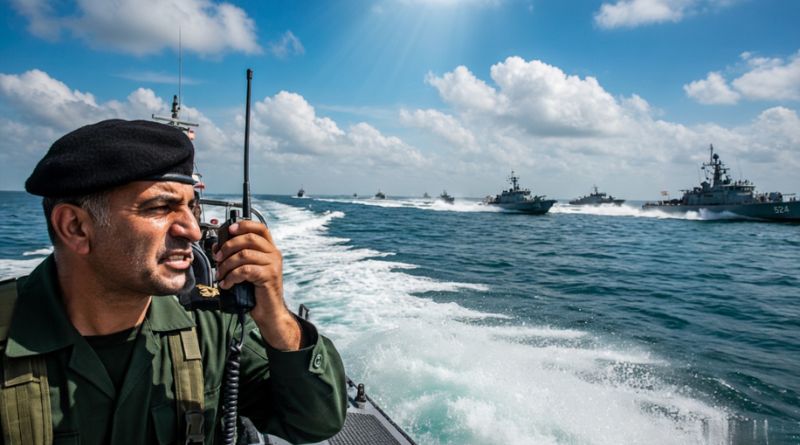
In the strategically vital Strait of Hormuz, where a significant portion of the world’s oil supply passes each day, tensions between the United States and Iran have long simmered beneath the surface. This narrow waterway has repeatedly served as a stage for calculated displays of power, where even small encounters can carry global consequences. As the USS Nimitz operated in these contested waters, Iranian Islamic Revolutionary Guard Corps (IRGC) fast attack boats reportedly moved into the area, signaling their presence in a manner consistent with past encounters. Such maneuvers are often designed to project strength, test reactions, and reinforce territorial messaging without crossing into open conflict.
What makes modern incidents in this region particularly significant is not just the movement of ships, but the increasing role of advanced military technologies. Analysts widely acknowledge that electronic warfare—including GPS interference, communications disruption, and signal manipulation—has become an integral part of naval strategy. While specific operational details are rarely confirmed, these capabilities allow forces to influence situations without resorting to direct confrontation. Rather than dramatic exchanges of firepower, today’s naval standoffs may unfold through quieter, less visible means. Temporary disruptions to navigation or communication systems, whether caused by intentional interference or environmental factors, can create confusion and alter tactical positioning in critical moments. In such scenarios, control over information can be just as decisive as traditional weapons.
The implications extend far beyond the immediate actors involved. Because the Strait of Hormuz is essential to global energy markets, even limited disruptions can affect international trade, energy prices, and geopolitical stability. This reality places added pressure on all sides to manage encounters carefully and avoid escalation. Ultimately, the evolving nature of these interactions highlights a broader transformation in modern warfare. Military strength is no longer defined solely by visible force, but also by technological sophistication and strategic restraint. As nations continue to adapt, the balance between deterrence and de-escalation will remain crucial. In this shifting landscape, the most consequential battles may not be the ones seen or heard, but those fought quietly across the invisible domains of technology and information.