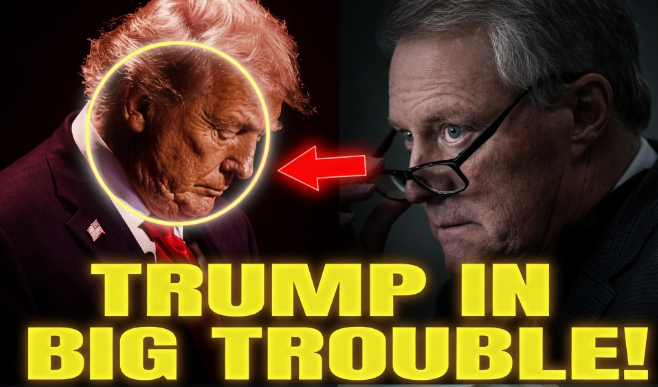
THE LOYALTY LEAK: Inside the Meadows Testimony, the Multi-Billion Dollar Tariff Setback, and the Bipartisan War on the West Wing In the spring of 2026, the Trump administration faces an unprecedented existential crisis described as a “double-pincer move” that threatens to dismantle its economic and legal foundations simultaneously. In Washington D.C., the political theater has shifted from rhetoric to high-stakes reality as a federal court ordered the return of billions of dollars in tariffs deemed unconstitutional. At the same time, the legal defenses of the presidency are crumbling following reports that Mark Meadows, the former Chief of Staff and the administration’s ultimate gatekeeper, has reportedly “flipped” and begun cooperating with a federal grand jury. These developments represent a structural failure of the “bulletproof” image the administration has sought to maintain for a decade, signaling that the guardrails of the American system are reasserting their authority with historic intensity. The economic pillar of the second term—a series of sweeping reciprocal tariffs—has suffered a catastrophic legal defeat. Following a Supreme Court ruling that invalidated the President’s use of emergency powers to tax imports, a federal judge has cleared the way for over 2,000 companies to receive immediate refunds. The financial implications are staggering: the refund pool is estimated between $130 billion and $175 billion. Furthermore, in a stunning court filing, it was revealed that the government must pay a nearly $700 million monthly interest penalty on these withheld funds. While corporate giants like Costco and FedEx are poised to reclaim billions, small manufacturers view the ruling as a lifeline after waiting years for crucial machinery. Despite the judicial order, the government is signaling a “strategic stall,” insisting on a manual review of millions of entries rather than utilizing automation.
While the Treasury grapples with these financial losses, the Department of Justice has secured what legal analysts call a “death blow” to the President’s primary legal defense. Mark Meadows has reportedly testified multiple times before a federal grand jury, shattering the narrative that the President held a “sincere belief” that the 2020 election was stolen. According to reports, Meadows informed prosecutors that he personally warned the President that the claims of widespread voter fraud were “completely baseless.” This testimony is pivotal because it shifts the legal perspective from a “sincere mistake” to a conscious, documented decision to mislead the nation and pressure state officials. As the former gatekeeper of the Oval Office, his cooperation provides a roadmap for prosecutors regarding the events leading up to January 6th. The administration’s stability was further called into question following a volatile social media post regarding Iran. The President claimed a “whole civilization would die tonight” if the Strait of Hormuz was not reopened. This extreme language triggered an immediate “immune response” from the legislative branch. Led by Senator Ed Markey and Representatives Ayanna Pressley and Seth Moulton, over 70 members of Congress have called for the President’s immediate removal. Moulton, a combat veteran, argued that the Commander-in-Chief has crossed into “impeachable territory,” suggesting that his conduct is too “unstable and impulsive” to go unchecked. This movement is no longer limited to progressive critics; it is a coordinated effort to address what many see as a global security risk. This legislative friction has moved the discussion of the 25th Amendment from the fringes of political discourse to a matter of “constitutional urgency.” For the first time in history, Section 4—which allows the Vice President and a majority of the Cabinet to declare a President unfit—is being seriously debated as a viable mechanism for transition. The process involves a written notice of unfitness, an immediate handover of power to the Acting President, and a potential Congressional vote to sustain the removal. While the requirement for a two-thirds vote in both chambers remains a Herculean task in a divided government, the fact that dozens of lawmakers are publicly citing this mechanism marks a historic departure from the “lockstep loyalty” that previously defined the caucus. As of April 2026, the convergence of these events—the cooperation of a former Chief of Staff, the massive drain on the Treasury for illegal revenue, and a serious debate over mental fitness—creates a singular portrait of a leadership crisis. The “Symphony of Madness” has reached a crescendo where the rules of the United States are finally fighting back against executive overreach. With every text logged and every illegal tariff entry reviewed, the country watches to see who will be left standing when this constitutional crisis finally breaks. The era of unilateral executive action is facing its most significant test as the legal and legislative branches coordinate a defense of the Republic.