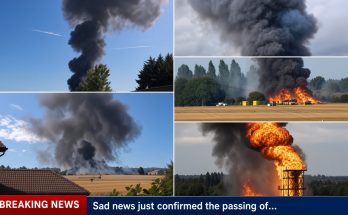
In the pre-dawn stillness of a Monday morning, a seismic event of catastrophic proportions shattered the peace across Southeast Asia and Southern China. At exactly 3:42 a.m. local time, a powerful 7.7-magnitude earthquake tore through the earth’s crust, sending shockwaves across international borders and leaving a trail of devastation in its wake. The epicenter was located in the rugged, mountainous terrain where China’s Yunnan Province meets the border of Myanmar, a region known for its complex tectonic activity but rarely visited by an event of this staggering intensity. According to data provided by the United States Geological Survey (USGS), the tremor originated at a shallow depth of approximately 10 kilometers—a factor that significantly amplified the destructive energy felt at the surface.
As the earth buckled, the immediate impact was felt most severely in the rural villages and burgeoning townships surrounding the epicenter. In these areas, the traditional architecture and older masonry proved no match for the violent oscillations. Preliminary reports from local officials and international monitoring agencies paint a grim picture of the human cost: dozens have been confirmed dead in the initial hours, with hundreds more sustaining serious injuries. The most harrowing aspect of the disaster remains the unknown number of civilians still buried beneath the jagged remains of collapsed apartment complexes and family homes. For those trapped in the darkness, the situation is a desperate race against the clock, as rescue teams struggle to navigate debris-clogged roads and fractured infrastructure.
The reach of the 7.7-magnitude quake extended far beyond the immediate border zone. In Northern Thailand, the major urban centers of Chiang Mai and Chiang Rai were jolted awake by sustained, violent shaking that lasted for over a minute. Residents described the sound as a low, guttural roar as high-rise buildings swayed and windows shattered onto the streets below. Local authorities in Thailand acted with immediate urgency, mandating mass evacuations of densely populated areas. Thousands of people, many still in their nightclothes, flooded into public squares and open parks, seeking refuge from the threat of structural collapse and the inevitable barrage of aftershocks that often follow such a massive release of energy.
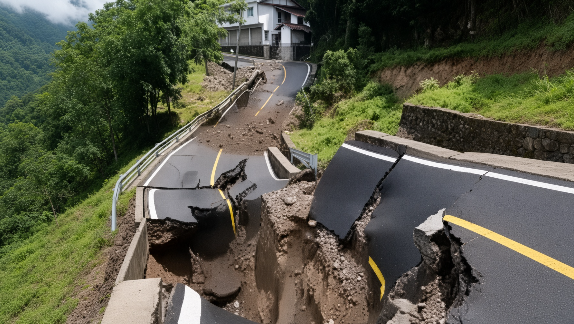
In Yunnan Province, the Chinese government has initiated a top-level emergency response. This involves the rapid deployment of thousands of military personnel, specialized search-and-rescue dogs, and heavy machinery capable of lifting the massive concrete slabs that now entomb residential neighborhoods. However, the logistical challenge is immense. The mountainous geography of the region, characterized by steep valleys and narrow passes, has been further compromised by landslides triggered by the earthquake. These secondary disasters have effectively cut off several remote mountain communities, leaving them isolated without electricity, running water, or outside assistance.
Hospitals across the impacted tri-country area are currently operating under “code black” conditions. Medical facilities in Kunming, Chiang Rai, and Kengtung are being overwhelmed by a steady stream of casualties. Surgeons and emergency nurses are working under grueling conditions, often utilizing backup generators as the regional power grid flickers and fails. Despite being stretched beyond their intended capacity, these medical professionals are performing life-saving triages in hallways and makeshift outdoor tents, treating everything from crush syndrome and blunt force trauma to severe shock.
Communication remains one of the greatest obstacles to a cohesive international response. The earthquake’s violence severed critical fiber-optic cables and toppled cellular towers, creating “black zones” where information is nonexistent. This digital silence has left families in a state of agonizing uncertainty, unable to confirm the safety of their loved ones. For the rescue teams, the lack of reliable communication means they are often flying blind, relying on antiquated radio frequencies and physical reconnaissance to determine which areas require the most urgent intervention.