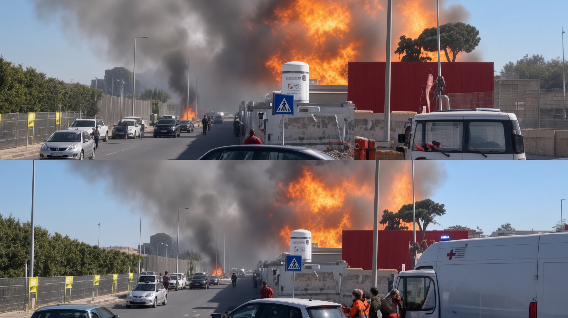
What was supposed to be a standard morning commute on the Iztapalapa–Chalco highway, one of the primary transit arteries for the eastern sprawl of Mexico City, was shattered by a catastrophic explosion that has left the nation in a state of profound shock. The incident occurred when an LPG tanker, laden with over 13,000 gallons of highly volatile liquefied petroleum gas, lost control and overturned. The resulting detonation transformed a routine traffic flow into a literal inferno, as a massive fireball engulfed dozens of vehicles and sent shockwaves through nearby residential neighborhoods. The scale of the disaster is staggering, with at least 15 confirmed deaths and over 70 people sustaining life-threatening injuries, many of whom are currently battling severe burns in specialized medical units.
The transition from a mundane commute to an apocalyptic scene happened with terrifying speed. As the tanker ignited upon impact, the Iztapalapa–Chalco highway was immediately choked with thick, black smoke, and visibility plummeted to near zero. Witnesses reported a deafening blast that rattled building foundations miles away, followed by an oppressive wall of heat that forced drivers to abandon their cars and flee on foot. In the immediate aftermath, the environment was characterized by pure chaos; however, amidst the terror, there were numerous accounts of civilian heroism. Drivers and bystanders risked their own lives to pull strangers from burning wreckage, performing desperate acts of rescue before organized emergency services could fully penetrate the heat and smoke.
The arrival of emergency responders and firefighters signaled the start of a grueling and high-stakes operation. The fire was so intense that it required specialized equipment and hazardous materials teams to manage the risk of secondary explosions from the remaining fuel. While firefighters worked to quell the flames, paramedics faced the daunting task of triaging victims under extreme conditions. The medical infrastructure of the region was pushed to its absolute breaking point, with local burn units reaching capacity almost instantly. Critical patients were transported via air and ground to hospitals across the city, where medical staff were forced into emergency double shifts to manage the influx of trauma victims suffering from acute smoke inhalation and third-degree burns.
Beyond the human toll, the physical devastation left in the wake of the explosion is profound. More than 30 vehicles were reduced to unrecognizable skeletons of blackened metal, and the very asphalt of the highway was scorched and structurally compromised by the extreme temperatures. Nearby businesses and homes suffered significant damage, with windows blown out and walls cracked by the force of the pressure wave. For the residents living along the highway, the disaster is not merely a logistical nightmare but a deep psychological trauma, reinforcing long-held fears regarding the safety of living in close proximity to a major thoroughfare used for the transport of hazardous chemicals.
A high-stakes investigation has been launched by authorities to determine the precise cause of the crash. Preliminary reports are scrutinizing several factors, including potential driver error, excessive speed, and the mechanical integrity of the LPG tanker. However, the investigation is also looking into deeper systemic failures. There are troubling indications that the vehicle may have been operating without the necessary safety permits or adequate insurance coverage. These findings have sparked a fierce debate over the lack of regulatory oversight and the failure of authorities to enforce safety protocols on high-risk transport companies, turning what could have been a simple mechanical failure into a national scandal regarding public safety.
In the aftermath of the tragedy, public outrage has reached a fever pitch. Residents of the affected areas, who have long campaigned for the rerouting of hazardous cargo away from residential zones, are now demanding immediate legislative action. The Iztapalapa–Chalco highway has become a symbol of the dangers inherent in urban planning that prioritizes commercial transit over the safety of citizens. Candlelight vigils have been held at the site of the blast, serving as both a memorial for the lost and a protest against the perceived negligence of the transport industry. As the community mourns, there is a collective call for stricter driver certification and the establishment of permanent safety corridors to prevent such an absolute massacre from ever occurring again.
Ultimately, the scars left by this disaster will be permanent. While the Iztapalapa–Chalco highway will eventually be repaired and reopened to traffic, the families of the victims and the survivors face a long and painful road to recovery. The incident serves as a grim reminder of the fragility of daily life and the catastrophic consequences of regulatory complacency. This tragedy on the outskirts of Mexico City is no longer just a traffic accident; it is a catalyst for a broader movement seeking to ensure that the routine act of commuting never again turns into a fight for survival in a wall of fire.