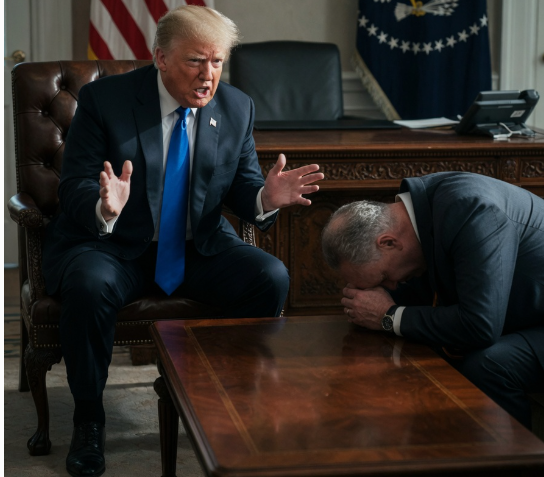
In a significant legislative showdown, the United States Senate has rejected a second attempt to impose limits on President Donald Trump’s military operations in Iran. The war powers resolution, introduced by Senator Cory Booker, failed with a 48-53 vote. While the outcome largely adhered to party lines, the vote highlighted internal fractures within both camps. Notably, Senator Rand Paul of Kentucky crossed the aisle to support the Democratic-led measure, while Senator John Fetterman of Pennsylvania broke with his party to vote against the resolution, signaling a complex debate over executive authority in times of conflict.
The resolution was a direct response to what sponsors described as the administration’s “massive and ongoing” military activity within Iran. Proponents of the bill argued that Congress has been increasingly sidelined as regional hostilities escalate, neglecting its constitutional role in declaring war. The proposal sought to invoke the War Powers Act of 1973, a piece of legislation passed during the Vietnam War era designed to check the Commander-in-Chief‘s ability to commit U.S. forces to hostilities without explicit congressional authorization. However, like a previous measure introduced by Senator Tim Kaine, the effort failed to gain the necessary traction to override executive momentum. The debate surrounding the War Powers Act remains one of the most contentious legal issues in Washington. Presidents from both parties have historically viewed the act as an unconstitutional infringement on Article II powers, which grant the executive broad authority over the military. Despite decades of friction, the act has never been definitively tested before the U.S. Supreme Court. Senator John Fetterman defended his opposition by categorizing the current military actions against Iran’s nuclear ambitions as “entirely appropriate,” even advocating for continued strikes against the regime’s leadership following the death of Ayatollah Ali Khamenei. On the ground, the situation in the Middle East remains volatile following joint U.S. and Israeli strikes that targeted Khamenei’s compound and Iran’s nuclear infrastructure. Reports suggest that the Assembly of Experts may have selected Mojtaba Khamenei as a successor, though his status remains uncertain following an Israeli airstrike during an official meeting. Israeli Defense Minister Israel Katz has maintained a hardline stance, declaring that any newly appointed leader of the Iranian regime would be considered an “unequivocal target for elimination,” emphasizing that the identity of the successor would not change the objectives of the operation. As the conflict deepens, a strategic divergence has emerged between the United States and Israel. While Israel has explicitly stated that its goal is regime change in Tehran, high-ranking U.S. officials, including Defense Secretary Pete Hegseth and Secretary of State Marco Rubio, have framed the mission as a targeted effort to eliminate nuclear and missile threats. Despite these differences in formal rhetoric, President Trump has publicly encouraged the Iranian people to “take over” their government, suggesting that the ultimate outcome of the joint military pressure may align with Israel‘s broader geopolitical ambitions for the region.