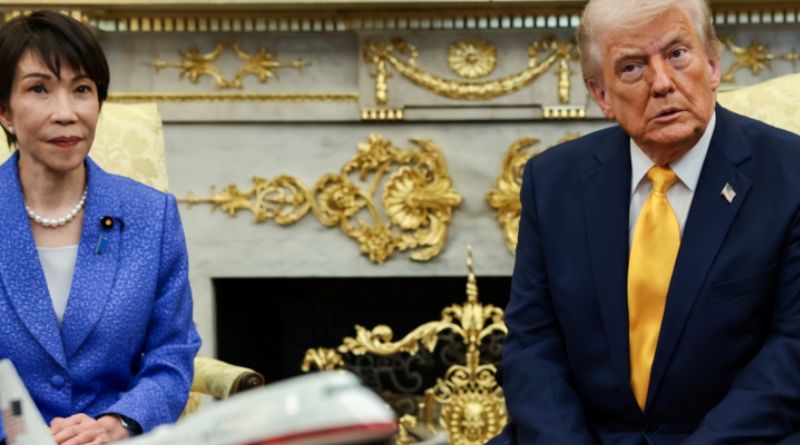
President Donald Trump drew widespread attention on Thursday after making an unexpected reference to the 1941 Pearl Harbor attack during an Oval Office meeting with Japanese Prime Minister Sanae Takaichi. The meeting, held on March 19, 2026, focused on bilateral cooperation, regional security, and coordination surrounding the escalating conflict involving Iran. U.S. military operations, which began in late February, have been described by officials as efforts to counter perceived threats from the Iranian government and degrade its strategic capabilities. During a question-and-answer session, a Japanese journalist asked why key allies, including Japan, had not been informed in advance about the strikes. Trump defended the decision by emphasizing the importance of maintaining strategic surprise in military operations. “We didn’t tell anybody because we wanted surprise,” he said, before adding a remark that quickly drew scrutiny: “Who knows better about surprise than Japan? Why didn’t you tell me about Pearl Harbor?”
The reference to Pearl Harbor—where more than 2,400 Americans were killed in a surprise attack by Japanese forces on December 7, 1941—created a visibly tense moment in the room. Observers described a brief ripple of uneasy laughter, followed by silence as the weight of the historical comparison became apparent. Prime Minister Takaichi did not directly respond to the comment, maintaining a composed and diplomatic demeanor throughout the exchange. She continued to engage in the broader discussion, avoiding any immediate reaction to the remark while keeping the meeting focused on policy matters. Trump soon returned to outlining the rationale behind the U.S. military strategy, arguing that secrecy had been essential to achieving tactical success. He suggested that providing advance notice to allies could have compromised operational effectiveness and reduced the impact of the strikes. The United States and Japan share a longstanding alliance built over decades since the end of World War II, with strong ties in defense, trade, and regional security. Japan remains a key partner in the Indo-Pacific, hosting U.S. military forces and participating in joint exercises aimed at maintaining stability in the region. At the same time, historical events such as Pearl Harbor continue to carry deep emotional and cultural significance.
Reactions to Trump’s remark were mixed across political and public spheres. Some analysts and commentators criticized the statement as insensitive and poorly timed, particularly given the diplomatic setting and ongoing global tensions. Others, including some supporters, argued that his blunt communication style reflects an emphasis on unpredictability and decisiveness in matters of national security. In Japan, public response also varied. While some expressed discomfort with the invocation of a painful historical event, others emphasized the importance of focusing on current strategic cooperation between the two nations. Despite the awkward moment, both leaders reaffirmed their commitment to continued collaboration on security, economic ties, and regional stability. The meeting ultimately underscored both the strength of the U.S.–Japan alliance and the challenges of navigating historical memory in modern diplomacy.