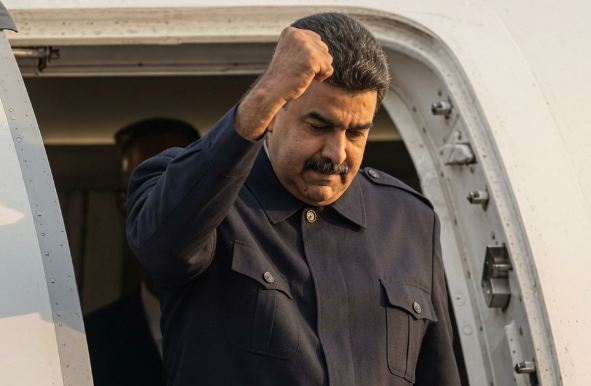
In recent weeks, a significant wave of viral misinformation has permeated digital platforms, suggesting that Nicolás Maduro is on the verge of returning to Venezuela to reclaim his position. However, a journalistic deep dive into verified reports confirms that these claims are entirely unfounded. The reality is that Maduro is currently in the custody of the United States, following a high-profile military operation executed in early January 2026. Rather than a homecoming, the former leader is situated in New York, where he is entangled in a complex legal battle against federal charges, including drug trafficking conspiracy and narco-terrorism.
The shift in Venezuela’s political landscape began on January 3, 2026, during a sophisticated military maneuver involving coordinated air and ground forces. This operation, supported by multiple intelligence agencies, resulted in the rapid extraction of Maduro and several close associates. This event stands as one of the most consequential developments in modern Latin American geopolitics, effectively ending his long-standing tenure and triggering a massive international response. Since his transfer to U.S. soil, Maduro has pleaded not guilty to the charges brought against him, and he remains detained while the judicial process moves forward.
In the wake of his removal, the governance of Venezuela has shifted to Delcy Rodríguez, who has stepped in as the acting president. Her administration has been tasked with the monumental challenge of managing government operations, stabilizing economic policy, and mending international relations. There are emerging signs of renewed diplomatic engagement with the United States as the interim government seeks to rebuild the nation’s standing on the global stage. Despite the internal shift in power, the vacuum left by Maduro has created a dynamic and often divided public discourse regarding the country’s future democratic processes.
The rapid spread of rumors regarding a potential return of Maduro can be attributed to the high political sensitivity of the region and the mechanics of social media. Emotional topics of this nature are highly shareable, often leading users to distribute unverified information. Click-driven headlines and ‘breaking news’ alerts are frequently designed to maximize engagement through sensationalism rather than factual accuracy. Journalists emphasize that these viral posts often oversimplify complex legal proceedings and ignore the lack of any official agreements that would facilitate a release or transfer of the former leader.
Internationally, the capture of Maduro has sparked a diverse range of reactions. While some global powers have expressed concerns regarding sovereignty and international law, others have viewed the intervention as a necessary catalyst for political change and regional stability. This division is mirrored within Venezuela, where public opinion remains split between those calling for reform and those who continue to express support for the previous administration. This tension highlights the importance of media literacy and the need for citizens to rely on official statements and established news organizations to navigate the ongoing political transition.
As the legal case against Nicolás Maduro proceeds in the United States, the future of Venezuela remains a subject of intense global scrutiny. Key indicators of the country’s trajectory will include the outcome of the New York court proceedings, the effectiveness of the Rodríguez administration, and the level of continued international involvement. For now, the narrative of Maduro returning to his homeland remains a fiction born of digital speculation, underscoring the vital lesson that in a digital age, not every headline reflects the factual reality of global events.