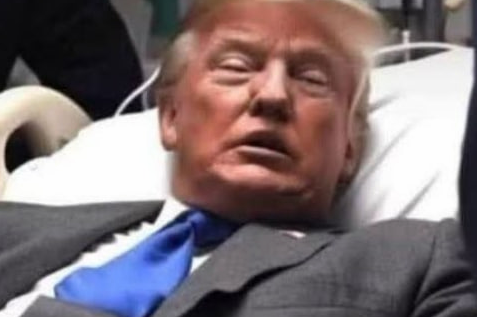
In an era where digital communication moves at the speed of light, the prevalence of misinformation has become a significant challenge for the public and journalists alike. Recently, a surge of social media posts and sensationalized YouTube clips have claimed that Donald Trump was shot again in Washington, D.C., often using alarming headlines like “20 minutes ago: Shock in D.C.” However, a rigorous editorial review confirms that these claims are entirely unfounded. No major news organizations, including the Associated Press (AP), Reuters, BBC, or The New York Times, have reported any such incident. These rumors represent a textbook case of clickbait, where creators use dramatic language to garner views and engagement without any basis in factual reality.
To understand why these rumors gain such traction, it is necessary to look back at the confirmed events involving the former president. The only verified shooting incident occurred on July 13, 2024, during a campaign rally in Butler, Pennsylvania. During this event, a gunman positioned on a nearby rooftop fired an AR-style rifle, grazing Donald Trump in the right ear. While the incident was chaotic and resulted in the tragic death of one attendee and injuries to several others, it remains the sole confirmed assassination attempt of its kind in recent history. The United States Secret Service and the Federal Bureau of Investigation (FBI) conducted extensive investigations into this matter, ensuring that the details were transparently reported to the global public.
Confusion in the public sphere is often exacerbated by secondary security incidents that are frequently misrepresented online. For instance, in September 2024, a security scare occurred near one of Donald Trump‘s golf clubs in Florida. While gunshots were fired in the vicinity, prompting an immediate Secret Service response, Donald Trump was never harmed or directly targeted in the way social media rumors suggested. Furthermore, in early 2025, reports surfaced regarding a shooting involving National Guard members near the White House. Although Donald Trump commented on the tragedy, he was not a victim of the event. Misinformation peddlers often take these distinct, unrelated occurrences and conflate them into a single, false narrative of a recurring physical attack.
The mechanics of misinformation are fueled by the algorithms of platforms like TikTok, Facebook, and X (formerly Twitter). Content that triggers high emotional responses—such as fear, shock, or outrage—is prioritized by these systems, allowing unverified claims to go viral before fact-checkers can intervene. This “economy of attention” rewards sensationalism over accuracy. For a story as significant as an attack on a high-profile political figure, the absence of reporting from PBS, CBS, or The Washington Post is a definitive indicator that the claim is false. Verified news coverage recently has actually focused on Donald Trump‘s involvement in international diplomacy, such as ceasefire negotiations between Thailand and Cambodia, rather than any domestic violence incidents.
Ultimately, the responsibility for maintaining an informed society rests on both the media and the consumer. Journalistic standards require rigorous verification and multiple sources before a story of this magnitude is published. For the general public, the key takeaway is the importance of a critical mindset. Before sharing or believing a “breaking news” alert from an unverified source, one should look for corroboration from legacy media outlets and official government statements. In a world where misinformation is designed to manipulate, relying on trusted, established news organizations is the best defense against the spread of falsehoods.