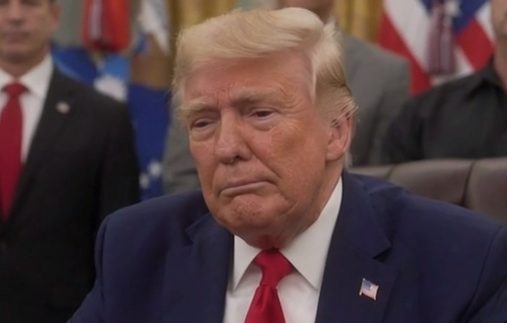
During a recent and unexpectedly reflective interview on Fox & Friends, former President Donald Trump delved into a topic rarely explored in the political arena: the state of his soul and his prospects for the afterlife. In a moment of striking vulnerability, Trump confessed that he occasionally experiences anxiety regarding his eternal destiny, admitting that he fears he might not “get to Heaven.” This admission, which stands in stark contrast to his typical persona of unshakeable confidence, was not merely a personal reflection but was intricately tied to his current diplomatic objectives. Trump suggested that his efforts to resolve major international conflicts, specifically the ongoing war in Ukraine, could serve as a divine pathway to salvation, framing his political legacy as a matter of spiritual survival.
The timing of these comments is significant, occurring shortly after high-level diplomatic engagements in Washington, D.C. Following a pivotal meeting with Ukrainian President Volodymyr Zelensky and several prominent European Union leaders, Trump revealed that the discussions aimed to establish a definitive roadmap for peace. The conflict in Ukraine, which began with the Russian invasion in February 2022, has resulted in catastrophic loss of life and global economic instability. In his remarks, Trump also disclosed that he has maintained a direct line of communication with Russian President Vladimir Putin, describing these interactions as a “serious diplomatic opening.” By positioning himself as the primary negotiator capable of halting the bloodshed, Trump is attempting to elevate the stakes of his diplomacy from the transactional to the transcendental.
Historically, Trump has leveraged his image as a master deal-maker to appeal to his base, but this new framing introduces a spiritual dimension to his America First agenda. He told the hosts of Fox & Friends that “Peace is the greatest thing we can achieve,” asserting that the preservation of human life transcends partisan politics. This shift appears to be an attempt to reconcile his past controversial rhetoric with a more statesman-like objective. By suggesting that God might look upon him more favorably if he succeeds in stopping wars, Trump is signaling a desire for moral redemption. For a leader who has often enjoyed the staunch support of evangelical Christians, this public display of self-doubt is a rare departure from the narrative of divine chosenness that sometimes surrounds his political identity.
The international community has reacted to these developments with a mix of cautious optimism and seasoned skepticism. President Volodymyr Zelensky, while noting that the world has seen many empty promises in the past, acknowledged that the current momentum represents a “genuine chance to move forward.” Similarly, European leaders who have historically clashed with Trump over his unorthodox methods seem to recognize a change in the air. French President Emmanuel Macron described the recent talks as having the most significant movement in years, while German Chancellor Olaf Scholz referred to the progress as a “glimmer of hope.” Despite these endorsements, the path to a cease-fire remains fraught with geopolitical hurdles, and the specifics of the proposed peace plan remain largely confidential.
Domestically, the reaction has been polarized. Critics of the former President argue that his sudden focus on spiritual legacy is a calculated move to secure the religious vote ahead of the upcoming election cycle. They point to his previous policy decisions and aggressive rhetoric as evidence that his current “peace-maker” persona is a political rebranding rather than a genuine change of heart. Conversely, political analysts like Sarah Matthews suggest that Trump is successfully merging his branding expertise with the ultimate human concern—mortality. By linking his success on the global stage to his fate in the afterlife, he differentiates himself from his political rivals and crafts a narrative of a man seeking a higher purpose beyond the White House.
Within the religious community, the response has been equally nuanced. Some leaders, such as Pastor Mark Robinson of Dallas, have expressed appreciation for Trump’s willingness to speak openly about eternal uncertainty, noting that such humility is rare in high-ranking officials. However, Robinson also cautioned that the true measure of Trump’s sincerity would be found in his actions. The religious right remains a critical demographic for Trump, and his focus on “saving lives” through diplomacy resonates with the pro-life and peace-oriented values held by many of his supporters. The intersection of faith and foreign policy has long been a feature of American politics, but Trump’s personal framing of it as a “ticket to Heaven” adds a unique and highly personalized layer to the discourse.
As the conflict in Eastern Europe continues to strain global alliances, the prospect of a U.S. leader brokering a deal between Ukraine and Russia remains a high-stakes gamble. Trump’s claim that both sides are “closer than people think” to a cease-fire suggests that he is betting his entire political—and spiritual—reputation on this outcome. If he succeeds, it would be a historic diplomatic achievement that could redefine his presidency and his place in history. If he fails, it could be seen as another example of grandstanding on the world stage. For Trump, the stakes are clearly more than just another political victory; they are, by his own admission, a matter of “the real test.”
In the final moments of his interview, the former President’s tone became uncharacteristically soft and contemplative. Reaffirming his doubts about his spiritual standing, he noted that while he is often told he is at the “bottom of the totem pole,” the act of stopping a war remains his primary focus. This moment of reflection provides a window into the psyche of a man who has spent decades in the public eye as a figure of combativeness. Whether this represents a genuine existential crisis or a sophisticated communication strategy, it underscores a fundamental shift in how Donald Trump views his role in the world. He is no longer just fighting for a second term; he is fighting for what he perceives as his final justification.
Ultimately, the narrative of Trump’s quest for peace serves as a bridge between his past and his future. By focusing on the sanctity of life and the moral imperative of ending war, he is attempting to transcend the controversies that have defined his career. As the 2024 election approaches, this blend of global diplomacy and personal faith will likely remain a central theme of his campaign. Whether this “ticket to Heaven” is valid remains to be seen, but the pursuit of it has already begun to reshape the geopolitical landscape, forcing both allies and adversaries to reconsider the potential for peace in one of the world’s most volatile regions.