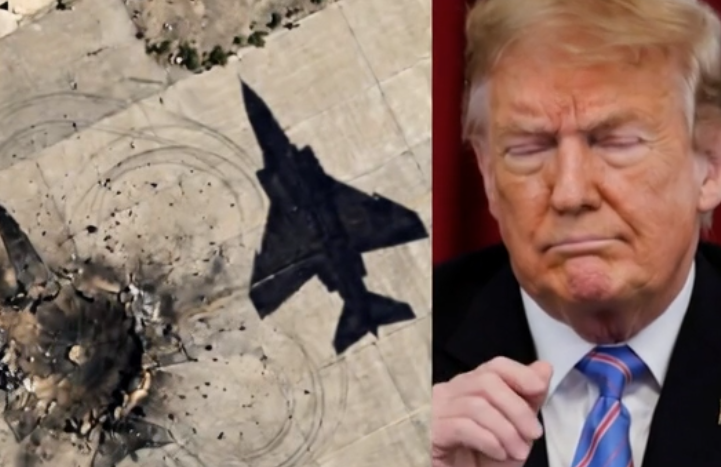
In an era defined by the rapid dissemination of information, a single image can ignite global concern before the full context is ever established. Recently, images depicting Iran painting silhouettes of warplanes onto concrete surfaces at military installations went viral, triggering a wave of intense speculation regarding potential military escalations. While social media users and some sensationalist outlets interpreted these visuals as a precursor to imminent conflict, defense analysts and military historians suggest a far more mundane reality. This incident serves as a significant case study in how routine military training exercises can be misinterpreted through the lens of digital media, transforming a standard procedure into a perceived international crisis.
The core of the matter, according to subsequent defense reports, is that the painted aircraft were part of routine exercises conducted by Iranian forces. These markings are not offensive weapons or signals of aggression but rather decoy installations designed to simulate targets for internal drills. By utilizing these visual representations on the ground, military personnel can rehearse tactical maneuvers, coordinate surveillance responses, and improve overall readiness without risking the destruction of expensive equipment. This practice is a standard operational procedure used by armed forces globally to maintain high levels of preparedness while managing costs and safety.
The use of deception in warfare has a long and storied history, predating modern technology by centuries. During World War II, both the Allied and Axis powers famously deployed decoy tanks, inflatable aircraft, and dummy airfields to mislead enemy reconnaissance. Similarly, throughout the Cold War, mock missile silos and simulated installations were used to create psychological uncertainty and confound satellite intelligence. In the modern geopolitical landscape, these visual decoys continue to serve a dual purpose: they provide cost-effective targets for pilot training and complicate the strategic calculations of foreign intelligence agencies. By creating ambiguity on the ground, a nation can protect its actual assets from being easily identified or targeted.
The speed at which the “painted warplanes” story gained traction highlights a significant vulnerability in the modern information ecosystem. Social media platforms are frequently optimized for engagement, favoring content that triggers strong emotional responses such as fear, anger, or urgency. When images of warplanes are presented without the necessary context of a training exercise, the information vacuum is quickly filled by worst-case scenarios and speculative narratives. Psychologically, humans are evolutionarily predisposed to react more strongly to perceived threats, a trait that digital algorithms exploit to keep users engaged, often at the expense of factual accuracy and objective analysis.
Public reaction to the viral images ranged from genuine alarm to skepticism, eventually leading to a broader critique of media ethics. Commentators have argued that dramatic headlines can distort relatively routine developments, amplifying fear unnecessarily. This phenomenon underscores the critical need for media literacy in the digital age. Digital literacy experts emphasize that the public must look beyond provocative headlines, avoid assuming worst-case outcomes, and seek out credible sources and expert analysis before sharing content. In the sensitive context of military intelligence and global security, incomplete data can be easily weaponized to create a sense of crisis where none exists.
Ultimately, the episode serves as a powerful reminder that what we see on our screens is often filtered through layers of interpretation and technological bias. The Iranian decoys were a defensive and instructional tool, not a signal of imminent war or offensive intent. As global tensions fluctuate, the ability of the public and the media to discern routine military activity from actual escalation becomes increasingly vital. By prioritizing verification over viral sensation and understanding the historical context of military decoys, we can better navigate the complexities of modern geopolitics and avoid the pitfalls of unnecessary panic in an interconnected world.