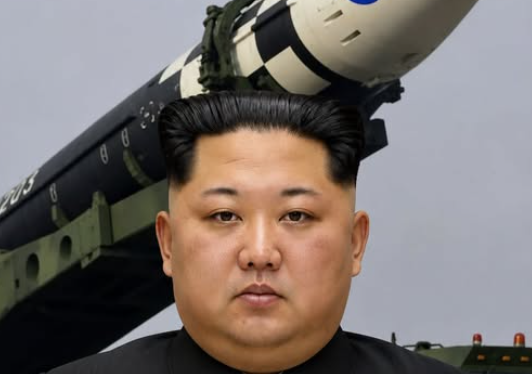
In the contemporary era of information warfare, headlines involving North Korea and Donald Trump often serve as a calculated psychological catalyst designed to trigger immediate public alarm. These narratives frequently utilize high-impact clickbait tactics, where the wording is strategically crafted to spark fear while deliberately omitting critical details. As the analysis suggests, phrases like “threatens directly” are often left open-ended, forcing the reader’s mind to fill the void with worst-case scenarios such as nuclear strikes or global conflict. This technique, while highly effective for driving digital traffic, creates a manufactured sense of global crisis where no concrete facts exist to support such claims.
Upon closer examination of these sensationalist reports, the actual content often reveals a stark disconnect from reality. Rather than reporting a verified military strike, a verified declaration of war, or an official emergency situation, the text often pivots toward exaggerated satire or surreal themes involving gastronomy and a so-called “binational apocalypse.” This bait-and-switch mechanism illustrates a dominant trend in the digital media landscape: the weaponization of high-profile political figures as geopolitical bait to maximize user engagement. The objective is rarely to inform, but rather to exploit the emotional amplification caused by urgency-driven keywords like “BREAKING” and “IMMINENT.”
The psychological impact of this sensational language is profound. By presenting incomplete thoughts and cliffhanger headlines, writers leverage a cognitive bias that prioritizes immediate, emotional responses over rational analysis. This creates an environment where misleading information spreads significantly faster than verified truths. Many users react solely to the headline without investigating the full article, a behavioral habit that contributes to the mass dissemination of unfounded fear. In a world where the speed of information outpaces journalistic verification, the line between satire and serious reporting becomes dangerously blurred for the average consumer.
To combat this phenomenon, the role of professional journalism and credible international news outlets remains more vital than ever. These established institutions adhere to stricter journalistic standards, ensuring that reports are grounded in evidence rather than psychological manipulation. Readers are strongly encouraged to adopt a critical perspective, looking beyond the initial shock of a title to confirm details through well-established sources. Ultimately, protecting oneself from online misinformation requires a commitment to careful verification and a clear understanding that in the modern attention economy, the most dramatic headlines are often those containing the least amount of substantive news.