Secretary of War Pete Hegseth has issued a stark warning regarding the global reach of Iran‘s ballistic missile program. During a recent address, Hegseth highlighted that Tehran‘s capabilities now extend to a range of approximately 4,000 kilometers, placing London and much of Western Europe within striking distance. This revelation follows an incident where two missiles were launched toward a target 4,000km away; although they missed their mark, the test proved that Iran has effectively doubled its previously stated range of 2,000 kilometers. This expansion of military reach has raised significant alarms among United States allies, as the geopolitical landscape grows increasingly volatile.
The implications of this technological leap are profound, as Hegseth noted that for years, the international community was led to believe that Iran‘s arsenal was restricted to regional targets. The Israeli military had previously theorized such a range was possible, but these recent developments confirm that Asia, Africa, and Europe are now vulnerable. Hegseth also drew a comparison between the proximity of Washington DC to Venezuela—a nation that has long partnered with Iran—and the proximity of Tehran to major European capitals, emphasizing that President Donald Trump has maintained a skeptical and proactive stance toward these emerging threats.
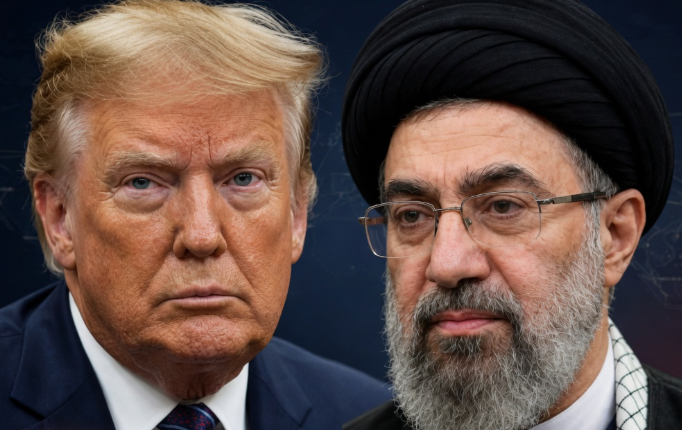
At the heart of the current diplomatic struggle is the status of Iran‘s enriched uranium stockpile. Ayatollah Mojtaba Khamenei has issued a definitive directive that this inventory must remain within the country, flatly rejecting a central demand from the Trump administration during ongoing peace negotiations. This rejection comes despite reports that Donald Trump had provided assurances to Israel that the materials—critical for the construction of a nuclear weapon—would be removed. The refusal to export the stockpile has created a significant wall of opposition, stalling further diplomatic breakthroughs between Washington and Tehran.
Simultaneously, Israeli Prime Minister Benjamin Netanyahu has remained steadfast in his refusal to end hostilities unless specific criteria are met. Netanyahu‘s demands include the complete removal of all enriched uranium from Iranian custody, a total cessation of financial and material support for regional proxy groups like Hezbollah in Lebanon, and the comprehensive dismantling of Iran‘s ballistic missile infrastructure. From the Israeli perspective, these measures are non-negotiable for ensuring regional stability and preventing a nuclear-armed Tehran.
Within Iran, the consensus among high-level administrative and military echelons is that relinquishing the uranium stockpile would be a catastrophic security failure. Insiders suggest that the Supreme Leader and his advisors view the material as a necessary deterrent; they fear that moving the material overseas would leave the nation defenseless and more susceptible to future military incursions by Washington and Tel Aviv. This perception of vulnerability has hardened Tehran’s bargaining position, even as they face the economic pressures of a stringent United States naval blockade.
The current diplomatic impasse is unfolding against the backdrop of a fragile truce that has been in effect since April 8. This cessation of hostilities followed a series of aggressive military exchanges in February, which saw the United States and Israel conduct strikes against Iranian interests, followed by Tehran‘s retaliatory strikes against Gulf nations hosting American military detachments. While active combat has paused, the regional environment remains a powder keg, with Hezbollah and Israeli forces continuing intense cross-border engagements.
Efforts to de-escalate the situation are currently being facilitated by Pakistan, which is serving as a mediator between the conflicting parties. However, the bargaining table is fraught with complexity. Iran maintains strategic leverage through its influence over the Strait of Hormuz, a vital artery for global energy supplies, while the U.S. continues to stifle Iranian shipping centers through naval dominance. While some observers believe that Pakistani mediation could yield progress, the fundamental disagreements over nuclear sovereignty and missile range continue to hinder a lasting peace settlement.