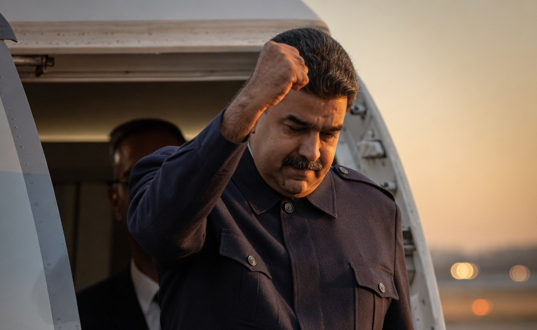
In recent weeks, the digital landscape has been inundated with viral headlines and social media posts suggesting a dramatic homecoming for Nicolás Maduro. These claims, often framed with the emotive language of a leader returning to his “patria,” have sparked significant confusion across international borders. However, a rigorous journalistic investigation into verified reports clarifies that these assertions are fundamentally baseless. As of the current date, Nicolás Maduro is not returning to Venezuela; instead, he remains in United States custody following a high-stakes military intervention that altered the course of Latin American history in early January 2026.
The events leading to Maduro’s current status were set in motion on January 3, 2026, during a meticulously coordinated U.S. military operation. This mission targeted strategic locations within Venezuela, utilizing a combination of air and ground forces supported by real-time intelligence from various international agencies. The operation resulted in the rapid extraction of Maduro and several of his high-ranking associates. Following his capture, he was immediately transported to the United States to face a series of serious criminal charges, including drug trafficking conspiracy and narco-terrorism. To date, Maduro has maintained a plea of not guilty, and his legal team continues to navigate the complexities of the U.S. federal court system while he remains detained.
With Maduro removed from the domestic political equation, the leadership of Venezuela underwent a seismic shift. Delcy Rodríguez stepped into the vacuum, assuming the role of acting president. Her administration has faced the monumental task of stabilizing a nation in transition, focusing on critical areas such as economic policy reform and the restoration of fractured international relations. Notably, there have been renewed diplomatic engagements between Venezuela and the United States, signaling a potential pivot toward regional cooperation. Despite these shifts, Rodríguez’s government must balance public opinion, which remains deeply divided between those calling for radical democratic reform and those who still harbor support for the previous administration.
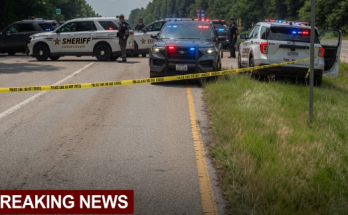
The persistence of rumors regarding Maduro’s return can be attributed to several psychological and systemic factors. In a highly polarized political climate, news regarding Venezuela is intensely sensitive, making it prime fodder for viral dissemination. Emotional reactions often override critical thinking, leading users to share click-driven headlines that prioritize engagement over factual accuracy. Phrases such as “Breaking News” or “He is returning” are engineered to exploit the curiosity of the public. This ecosystem of misinformation is further complicated by social media algorithms that allow unverified claims to gain traction faster than corrected, verified reports from official government statements or established news organizations.
The global community has reacted to these developments with a mixture of support and skepticism. While some nations have hailed the move as a necessary step toward political change, others have expressed grave concerns regarding national sovereignty and the precedents set by international military intervention. Within Venezuela, the situation remains dynamic and unpredictable. Public discourse is increasingly focused on political reform and the possibility of future democratic processes. However, the path forward is obscured by the ongoing legal proceedings in the United States and the lack of any formal diplomatic agreements that would facilitate Maduro’s release or transfer. For now, the narrative of his return remains a fabrication of the digital age, underscoring the vital importance of media literacy and the verification of sources in an era of rapid information exchange.