A federal lawsuit challenging California’s congressional redistricting process began Monday in the U.S. District Court for the Central District of California in Los Angeles, with Judge Josephine L. Staton presiding over the proceedings.
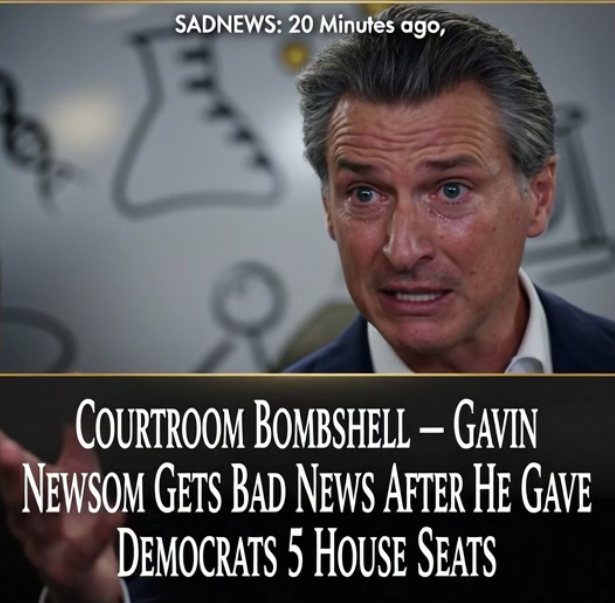
The case centers on Proposition 50, a ballot measure approved by California voters in the Nov. 4 election. The U.S. Department of Justice is among the plaintiffs contesting the measure, which altered the state’s redistricting process and could potentially allow Democrats to gain as many as five additional seats in the U.S. House of Representatives during the 2026 midterm elections.Proposition 50 was adopted after Texas implemented its own mid-decade redistricting plan, a move widely viewed as benefiting Republicans and potentially enabling the party to add up to five congressional seats in that state. Plaintiffs in the California case are seeking a preliminary injunction to block enforcement of the newly drawn district boundaries while the court considers the merits of the challenge.
“We want our day in court to make sure we’re making all of our arguments and the people are heard,” Assemblymember David Tangipa, R-Fresno, previously told The Center Square. Tangipa, one of the plaintiffs in the lawsuit, argued that the state failed to meet established legal requirements. “Under the Voting Rights Act, there are very clear standards,” he said. “I do believe the state of California did not follow those standards.” The dispute follows a recent legal battle over redistricting in Texas. Last month, a federal court temporarily blocked the Republican-led legislature’s mid-decade redistricting plan, finding it likely violated federal voting rights laws by redrawing districts in a way that discriminated against voters of color, according to earlier reporting by The Center Square. However, the U.S. Supreme Court later allowed Texas’ revised congressional maps to take effect. In a 6–3 decision, the justices concluded the state was likely to prevail on the merits and criticized lower courts for what they described as significant legal errors in blocking the maps.