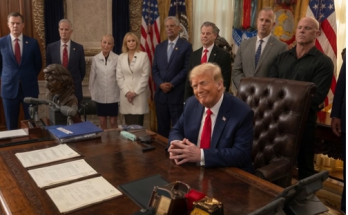
In a move that has sent shockwaves across the international community, President Donald Trump announced that the United States has executed a series of military strikes against three primary nuclear installations within the Islamic Republic of Iran. The targets included the high-security facility at Fordo, as well as the Natanz and Isfahan complexes. Labeling the operation a “very successful attack,” Trump took to Truth Social to declare this a historic turning point for the security of Israel and the world, demanding that Iran immediately cease all hostilities. This unilateral military action has fractured global opinion, drawing sharp lines between those who view it as a necessary enforcement of peace and those who see it as a dangerous violation of international law.
Iranian leadership responded with immediate and fierce condemnation. Foreign Minister Abbas Araghchi characterized the strikes as “outrageous,” “lawless,” and “criminal,” asserting that the attacks on peaceful nuclear installations constitute a grave violation of the United Nations Charter and the Non-Proliferation Treaty (NPT). Araghchi warned that Iran reserves all rights to a legitimate response in self-defense to protect its sovereignty and people. He specifically challenged Western powers, including the United Kingdom and the European Union, questioning how they could call for Tehran to return to a negotiating table that has effectively been “blown up” by American aggression.
Conversely, Israeli Prime Minister Benjamin Netanyahu hailed the decision as a bold move that will alter the course of history. Echoing the Trump administration’s “Peace through strength” doctrine, Netanyahu argued that military force is the essential precursor to regional stability. This sentiment, however, was not shared by China, whose Foreign Ministry released a statement strongly condemning the violation of IAEA-supervised facilities. Beijing urged all parties—specifically Israel and the United States—to cease hostilities and return to a path of dialogue, warning that such escalations only serve to worsen the already critical tensions within the Middle East.
The United Nations has expressed profound alarm regarding the potential for regional contagion. Secretary-General Antonio Guterres warned of a “spiral of chaos,” emphasizing that there is no military solution to the nuclear standoff. Similarly, the European Union‘s chief diplomat, Kaja Kallas, called for an immediate de-escalation while maintaining the stance that Iran must never develop a nuclear weapon. The U.K. Prime Minister Keir Starmer joined this call for diplomacy, prioritizing regional stability and urging Tehran to resume negotiations despite the current volatility.
Regional reactions reflected a mix of concern and denunciation. Saudi Arabia, a key U.S. ally that recently mended ties with Tehran, stated it is monitoring the situation in “sisterly” Iran with great concern. Meanwhile, Tehran-backed groups such as the Houthis in Yemen and the Hezbollah-influenced presidency in Lebanon denounced the “blatant aggression,” fearing that the bombing of nuclear facilities could destabilize multiple countries simultaneously. In Russia, senior security official Dmitry Medvedev took a more cynical tone, mocking Trump’s Nobel Peace Prize aspirations by suggesting the leader who branded himself a peacemaker has instead initiated a new conflict.
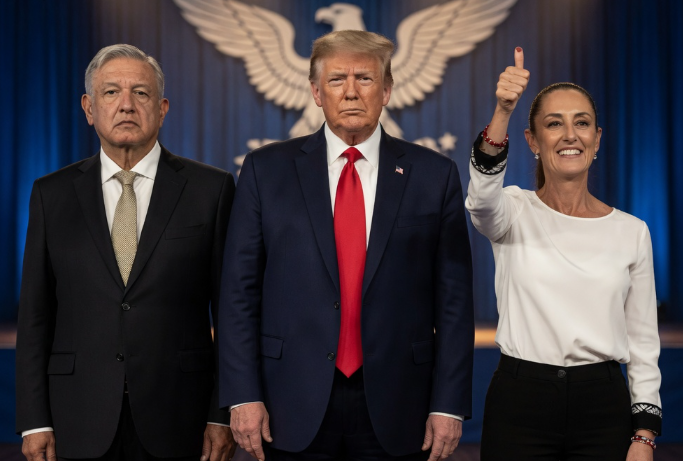
In Latin America, the governments of Venezuela and Cuba issued some of the strongest rebukes. Venezuelan Foreign Minister Yvan Gil and Cuban President Miguel Diaz-Canel both condemned the strikes as a violation of international law that plunges humanity into a crisis with “irreversible consequences.” Mexico and Australia followed with more measured calls for de-escalation, emphasizing the need for peaceful coexistence and the restoration of diplomatic channels. In Asia, Japan‘s Prime Minister Shigeru Ishiba and South Korea‘s National Security Council noted the paramount importance of calming the situation to minimize global economic and security impacts.
Finally, a moral appeal was issued from the Vatican, where Pope Leo addressed the international community, stressing the “moral responsibility” to halt the tragedy of war. The Pope warned that no military victory could ever compensate for the human suffering of mothers and children or the “stolen future” of the region. He urged nations to silence their weapons and chart a path toward peace, rather than falling into the “irreparable abyss” of bloody conflict.