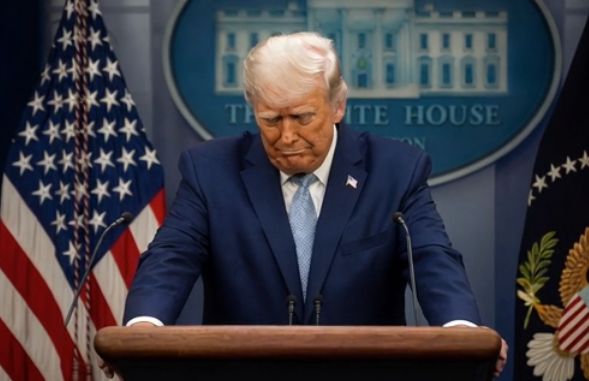
In an extraordinary departure from his typical rhetoric of triumph and unyielding confidence, former President Donald Trump recently utilized a televised appearance on Fox & Friends to offer a glimpse into his private spiritual anxieties. During the interview, Trump expressed a rare sense of vulnerability regarding his afterlife, admitting that he occasionally worries he might not “get to Heaven.” This candid confession has introduced a profound new dimension to his political identity, as he explicitly linked his eternal salvation to his success in mediating global conflicts—specifically the ongoing war in Ukraine.
The timing of these remarks is particularly significant, occurring shortly after high-level diplomatic discussions at the White House involving Ukrainian President Volodymyr Zelensky and several prominent European leaders. These meetings were aimed at establishing a definitive road map for peace in Eastern Europe, a region that has been devastated since the Russian invasion in February 2022. Trump revealed that his involvement in these peace talks is not merely a matter of statecraft but a moral imperative that he believes could influence how God views his life’s work. By framing himself as a potential peacemaker, Trump is attempting to pivot from his America First isolationist image toward that of a global humanitarian seeking a lasting legacy.
Central to Trump’s spiritual calculus is the belief that “peace is the greatest thing we can achieve.” He suggested to the Fox & Friends hosts that the stakes of international warfare transcend the realm of mere politics, entering the territory of the divine. The former President noted that while he is often perceived as being at the “bottom of the totem pole” in spiritual terms, the act of saving lives through diplomacy could be his “way in” to Heaven. This shift in tone has caught both supporters and detractors off guard, as Trump has historically leaned on his evangelical base by championing religious liberty rather than questioning his own spiritual standing or personal humility.
On the geopolitical front, Trump’s claims of progress were bolstered by his disclosure of direct communication with Russian President Vladimir Putin. Sources close to these discussions have described the current environment as the “most serious diplomatic opening” since the conflict began. While the specifics of the proposed cease-fire remain under wraps, the reaction from Europe has been notably optimistic. French President Emmanuel Macron and German Chancellor Olaf Scholz both acknowledged the momentum, with Macron describing the recent talks as the most significant movement in years. This suggests that Trump’s unorthodox approach might be creating a “glimmer of hope” where traditional diplomacy has stalled.
However, the intersection of faith and foreign policy has not been without its critics. Many political analysts, including Sarah Matthews, suggest that Trump’s sudden emphasis on the afterlife may be a strategic maneuver to solidify his standing with religious conservatives ahead of an upcoming election cycle. Critics argue that his record often contradicts his newfound focus on peace, yet even his fiercest opponents acknowledge the uniqueness of a U.S. leader admitting to spiritual self-doubt on a public stage. The debate now centers on whether this is a genuine moment of existential reflection or a masterclass in political branding and image reshaping.
Religious leaders have responded with a mixture of intrigue and caution. Pastor Mark Robinson of Dallas noted that while it is rare for a political figure of Trump’s stature to admit uncertainty about Heaven, the true measure of his sincerity will be found in the tangible results of his peace efforts. For Trump, the quest to end the war in Ukraine has become inextricably tied to his personal legacy. As the interview concluded, he remained contemplative, suggesting that stopping a war might be his final “ticket” to redemption—a sentiment that underscores a man who is now thinking as much about the history books and the afterlife as he is about the next news cycle.