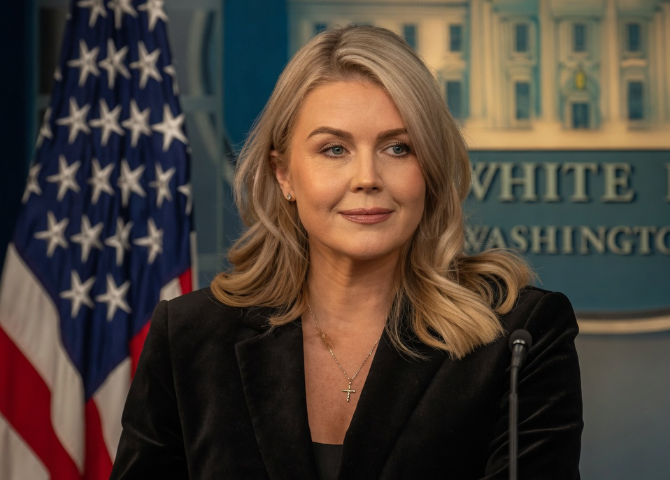
Breaking the Legacy Media Monopoly: Karoline Leavitt Defends White House Press Overhaul In a high-stakes media forum hosted by Axios co-founder Mike Allen, White House Press Secretary Karoline Leavitt outlined a transformative vision for the executive branch’s relationship with the press. The focal point of the discussion was the administration’s controversial decision to restructure the 13-person press pool, an elite group of journalists traditionally tasked with shadowing the president on daily assignments. Leavitt argued that the current system constitutes a “monopoly” held by legacy media outlets and stated that the Trump administration is moving toward a more inclusive, rotating system. By broadening access to a wider variety of news organizations, the administration claims it is adapting to the modern digital age and ensuring that diverse journalistic perspectives are represented in presidential coverage. The debate highlighted a fundamental friction between traditional journalistic standards and the administration’s new policies. Mike Allen underscored the importance of historical documentation, citing the Associated Press and the iconic “fight, fight, fight” photograph captured by Evan Vucci in Butler, Pennsylvania, following the assassination attempt on Donald Trump. Allen expressed concern that limiting the permanent presence of established outlets might erode the independent media’s ability to provide objective, real-time history. However, Leavitt pushed back against the notion of “restrictions,” framing the changes as a democratization of access. She contended that it is inherently unfair for a handful of legacy organizations to maintain permanent, daily privilege when thousands of other credentialed journalists are seeking to cover the administration.
The White House Correspondents Association (WHCA) has emerged as a vocal critic of these changes, arguing that the government should not exercise control over the composition of the media that covers it. In response, Leavitt questioned the authority of the WHCA board, suggesting they should not have the power to decide who gains entry to Air Force One or the Oval Office. To support her stance that the move is not ideologically motivated, she noted that the administration continues to grant access to what she termed “fake news leftist outlets.” According to Leavitt, the goal is transparency and variety, ensuring that the public receives news through a multitude of journalistic lenses rather than a concentrated group of long-standing reporters who have historically dominated the room. Leavitt also utilized comparative data to distinguish the Trump administration’s media engagement from that of former President Joe Biden. Citing an Axios report titled “Biden’s media evasion,” she pointed out that Biden had participated in significantly fewer press conferences and interviews than any of the last seven presidents at the same point in their tenure. While Joe Biden held only 164 such events, Donald Trump had already participated in 468. This comparison extended to other past leaders, such as George W. Bush (248) and Ronald Reagan (262), positioning the current president as a much more accessible figure for the press than his immediate predecessor. Leavitt concluded that this high level of engagement is a direct continuation of the nontraditional media strategy that defined Trump’s successful campaign. The ultimate objective, according to the Press Secretary, is to ensure that the public is hearing about the administration’s actions every single day through a variety of different sources. By prioritizing direct communication and a wide array of media participants over established norms, the administration claims to be responding to the realities of a fragmented media environment. By disrupting the status quo, the administration believes it can better serve a public that increasingly consumes information outside of traditional channels. This shift signifies a broader transition in political communication, where the White House seeks to define its own narrative by bypassing the gatekeeping functions of the legacy press corps.