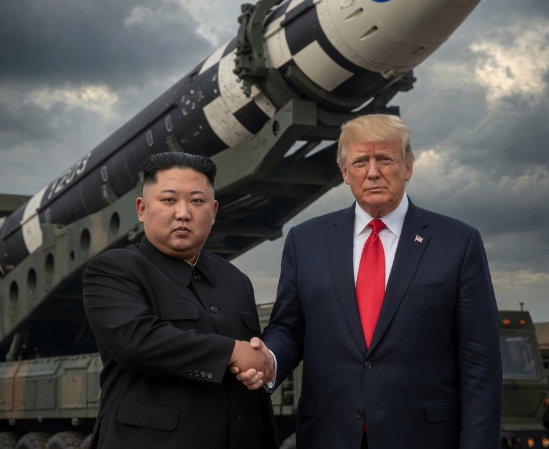
In the modern digital landscape, headlines often serve as a psychological trap rather than an informative summary. A prime example is the recent surge in articles involving North Korea and Donald Trump. These pieces are strategically designed to trigger an immediate fear response by using phrases like “threatens directly,” only to cut off before providing substantive details. This technique, known as high-impact clickbait, exploits the public’s interest in major political figures to drive traffic, even when the underlying content is entirely satirical or nonsensical, featuring absurd themes such as “binational apocalypses” and unrelated culinary references.
The effectiveness of this disinformation tactic lies in its reliance on urgency-driven language. Words like “BREAKING,” “APOCALYPSE,” and “IMMINENT” are used to create a sense of impending doom. By providing an incomplete thought in the title, publishers force the reader’s brain to fill in the blanks with worst-case scenarios, such as nuclear war or missile strikes. This psychological manipulation ensures that the audience remains engaged, even if the actual article contains no verified military action or official emergency declarations. This trend highlights a significant shift in online media, where the speed of information spread often outpaces the rigorous process of verification. Emotional reactions travel much faster than rational analysis, leading to the rapid dissemination of misleading narratives. Because sensational wording is prioritized over factual reporting, these articles often bypass the journalistic standards typically found in credible international news outlets. The goal is rarely to inform, but rather to maximize clicks and social media engagement through emotional amplification. To combat the spread of such misleading information, it is vital for readers to practice media literacy. This includes reading beyond the headline and verifying extraordinary claims through established sources before reacting or sharing. By comparing multiple verified sources and analyzing the full context of a story, the public can develop a clearer, more accurate understanding of the global geopolitical situation. In a world of instant information, the ability to distinguish between sensationalism and fact-based journalism remains a critical skill for every digital citizen.