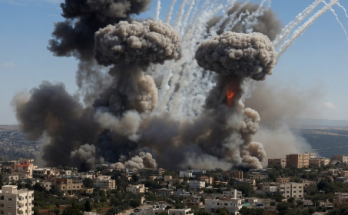
In a move that has sent tremors through the international geopolitical landscape, President Donald Trump announced that the United States conducted a series of military strikes against three critical nuclear facilities in Iran. The targeted locations included the highly sensitive Fordo facility, as well as complexes in Natanz and Isfahan. Describing the operation as a “very successful attack,” Trump utilized the Truth Social platform to declare the event an “historic moment” for the U.S., Israel, and the world at large. He framed the military action as a necessary catalyst to force Tehran into ending ongoing hostilities, asserting that the path to peace is paved through the projection of strength.
The response from Tehran was immediate and defiant. Iranian Foreign Minister Abbas Araghchi condemned the strikes as a “grave violation” of the UN Charter, international law, and the Nuclear Non-Proliferation Treaty (NPT). Araghchi asserted that Iran’s nuclear installations are intended for peaceful purposes and categorized the U.S. behavior as “lawless and criminal.” He warned that the Islamic Republic reserves all rights under international law to respond in self-defense to protect its sovereignty and people, noting that the morning’s events would have “everlasting consequences” for global stability. In contrast, Israel emerged as a staunch supporter of the U.S. action. Prime Minister Benjamin Netanyahu lauded the decision, calling it a “bold” move that would “change history.” Echoing the sentiment of “peace through strength,” Netanyahu emphasized that the military strike demonstrated the necessary resolve to handle the Iranian threat. Meanwhile, other regional actors expressed deep concern. Saudi Arabia, which only recently restored diplomatic ties with Tehran in 2023, is reportedly monitoring the situation with “great concern.” Conversely, Yemen’s Houthi militants and the leadership in Lebanon denounced the aggression, citing fears of a massive regional escalation that could threaten the security of multiple nations. Major global powers such as China and Russia have voiced strong opposition. The Chinese Foreign Ministry characterized the strikes as a violation of the United Nations Charter and a move that significantly worsens tensions in the Middle East, urging Israel and the U.S. to return to a path of dialogue. In Russia, senior security official Dmitry Medvedev took a more critical stance toward Trump personally, questioning his identity as a “peacemaker” and suggesting that the administration is instead initiating a new and dangerous conflict. The United Nations and the European Union have both called for immediate restraint. UN Secretary-General Antonio Guterres warned that the conflict could rapidly spiral out of control, leading to catastrophic consequences for civilians. Similarly, EU diplomat Kaja Kallas urged all parties to step back from the brink and return to negotiations, while maintaining the stance that Iran must not develop nuclear weapons. U.K. Prime Minister Keir Starmer and Japanese Prime Minister Shigeru Ishiba echoed these calls for de-escalation, with Ishiba noting the paramount importance of calming the situation while still acknowledging that Iran’s nuclear development must be blocked. The humanitarian and moral dimensions of the conflict were highlighted by Pope Leo, who urged the international community to avoid an “irreparable abyss.” During a weekly prayer, the Pope emphasized that no military victory can compensate for the human suffering of mothers and children, calling for diplomacy to silence weapons. Other nations, including Venezuela, Cuba, Mexico, and Australia, have joined the chorus calling for a cessation of hostilities, citing the need for peaceful coexistence and the restoration of international law in a region that remains highly volatile.