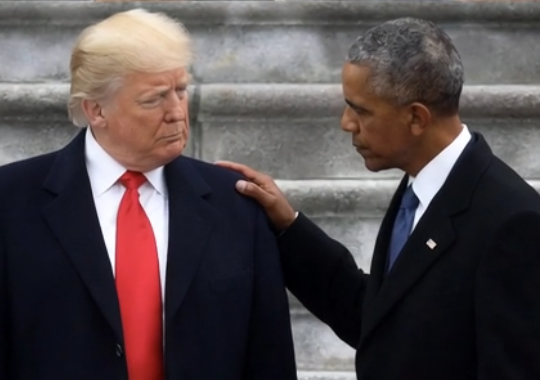
A Divided Legacy: Trump and Obama Clash Over Hungary Elections and Iran Strategy The geopolitical rift between President Donald Trump and former President Barack Obama has widened following the recent elections in Hungary. For over a decade, Viktor Orban served as a primary ideological ally for the Trump administration in Europe, governing through multiple democratic cycles. However, the political landscape shifted dramatically when Orban was defeated by the left-wing challenger Peter Magyar. This occurred despite a strategic intervention from the United States, which saw Vice President JD Vance dispatched to Hungary in a last-minute attempt to bolster Orban’s support. The defeat of the incumbent leader was met with public jubilation from Barack Obama, who characterized the shift as a monumental victory for global democracy, drawing parallels to the 2023 elections in Poland. Obama used social media to praise the Hungarian people, emphasizing their resilience and commitment to the rule of law.
The friction between the two leaders extends far beyond Central Europe, touching upon domestic United States politics and civil rights legacies. Trump and his supporters have frequently criticized Obama for perceived inconsistencies in redistricting efforts, noting his support for changes in Virginia and California while opposing them in red states like Texas and Missouri. Additionally, the recent passing of Rev. Jesse Jackson became a flashpoint for political combat; Obama’s eulogy was perceived by some as an attack on the Trump administration, leading to a public rebuke from the late icon’s own son, Jesse Jackson Jr. At the center of the current escalation is the deteriorating situation in the Middle East. President Trump and War Secretary Pete Hegseth have launched a scathing critique of Obama’s previous foreign policy, specifically the 2015 Iran nuclear deal. Trump has repeatedly cited the $1.7 billion cash payment made to the Iranian regime during the Obama era as a catastrophic error. He described the delivery of funds via Boeing 757 jetliners as a move that provided Tehran with the liquid capital necessary to finance ballistic missile programs and hostile activities against American installations. Trump maintains that his decision to terminate the nuclear agreement during his first term was the only reason Iran did not achieve nuclear capability sooner, which he believes would have led to a catastrophe for Israel and the wider region. These sharp exchanges come as the United States and Israel engage in the fourth week of Operation Epic Fury. This military campaign is designed to systematically eliminate the military capabilities of Iran following intelligence reports that the regime was rebuilding its nuclear weapons program in secret. During his recent remarks at the FII PRIORITY Summit, Trump reflected on the power of the presidency, noting the immense influence required to facilitate such massive cash transfers, while simultaneously vowing that his current military and diplomatic strategy is focused on reversing the perceived damage caused by his predecessor’s ‘nuclear deal’ and ensuring regional stability.