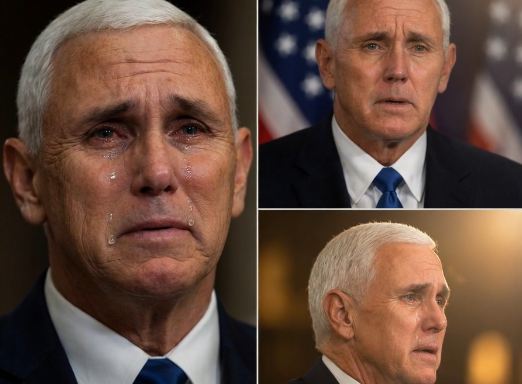
Former Vice President Mike Pence is currently navigating one of the most volatile eras in the history of the Republican Party. As he seeks to maintain his political relevance, Pence has increasingly positioned himself as a “constructive” yet principled critic of his former running mate, Donald Trump. This effort is most visible in his recent media circuit, where he has sought to defend traditional GOP foreign policy against a rising tide of isolationism. During a high-profile interview on CNN with Kate Bolduan, Pence addressed the evolving dynamics of U.S. support for Ukraine, emphasizing his concern over the internal mechanics of the Pentagon and the broader strategic goals of the United States in Eastern Europe.
One specific flashpoint involves Pete Hegseth and reports of a unilateral decision to pause arms supplies to Kyiv. While Trump eventually reaffirmed support during a conversation with President Zelenskyy, Pence labeled the initial lack of executive oversight on such a critical matter as “troubling.” Moving beyond mere procedural criticism, Pence advocated for a significant escalation in aid, arguing that Ukraine requires “offensive capability” and robust aerial protection to secure a lasting peace. This stance puts him at direct odds with the isolationist wing of the GOP, whom he claims are losing momentum despite their vocal skepticism regarding U.S. actions against Iran and other global adversaries. The rift between Pence and Trump also extends to the legacy of American involvement in the Middle East. Following Trump’s speech in Saudi Arabia—where the former President denounced “nation-builders” and compared U.S. cities unfavorably to Riyadh and Abu Dhabi—Pence took to NBC’s Meet the Press to describe the remarks as a “disservice” to those who served in the Global War on Terror. He pointedly noted the irony of delivering such a critique in Saudi Arabia, reminding audiences that the majority of the 9/11 hijackers were Saudi nationals. By framing his arguments around the honor of U.S. service members, Pence is attempting to reclaim the moral high ground for traditional conservatism. Ultimately, Mike Pence is betting that there remains a significant appetite within the Republican base for a leader who prioritizes American global leadership and military honor over America First skepticism. While his ability to win over the MAGA faithful remains highly uncertain, his willingness to serve as a “constructive force” highlights a deep ideological divide within the party. By acting as a guardian of U.S. internationalism, Pence is testing whether the party can return to its interventionist roots or if the shift toward populist isolationism is permanent.