The integrity of the American justice system is currently under fire following what critics describe as a calculated attempt to sanitize public records. Attorney General Pam Bondi and the Department of Justice (DOJ) are facing intense scrutiny over the execution of the Epstein Files Transparency Act. Despite the law being signed by Donald Trump himself, the recent handling of evidence suggests a frantic effort to curate history rather than provide the full disclosure promised to the American people. This controversy highlights a perceived hypocrisy within an administration that campaigned on exposing the “deep state” but now appears caught in a digital backroom attempting to manage the optics of the Jeffrey Epstein investigation.
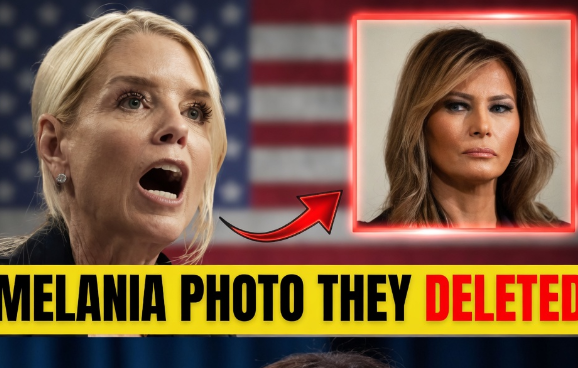
At the center of this firestorm is the mysterious disappearance and subsequent reappearance of File EFA0000468. Released on December 19, 2025, as part of a massive document dump, this specific file contained a framed photograph discovered during a raid of Epstein’s Manhattan mansion. Unlike generic social snapshots often seen in the media, this photo was reportedly recovered from Epstein’s personal desk drawer. The image features Donald Trump, Melania Trump, Jeffrey Epstein, and Ghislaine Maxwell. The intimacy of its location—kept in the private workspace of the most notorious sex offender in modern history—carries a symbolic weight that suggests a level of mutual valuation far beyond casual acquaintance. When the file vanished from the DOJ website, leaving a conspicuous gap between index numbers 467 and 469, it sparked immediate allegations of a White House cover-up.The DOJ’s official explanation for the removal has been met with significant skepticism. Deputy Attorney General Todd Blanche defended the action by citing “victim protection” concerns. However, this reasoning was quickly challenged by the Associated Press and the House Oversight Committee. Critics argue that if the photograph truly compromised the safety or privacy of victims, it would have been redacted during the extensive pre-release legal review. Instead, the file was only removed after it began circulating globally, then restored forty-eight hours later without a single alteration. This sequence of events suggests the temporary deletion was a reactionary attempt at political damage control rather than a legitimate legal safeguard for survivors. This incident has set a troubling precedent for the remainder of the Epstein file disclosures. With hundreds of pages still heavily redacted and critical Grand Jury documents remaining blacked out, the saga of File 468 serves as a warning about the fragility of the current disclosure framework. It portrays an administration caught between its legal mandates and the political necessity of protecting the President‘s reputation. As Pam Bondi oversees the process, federal judges are reportedly beginning to question the distinction between “good faith” transparency and institutional self-protection. Ultimately, the story of the photograph suggests that the public is receiving a filtered version of the truth, overseen by an Attorney General who appears more concerned with the narrative of a desk drawer than the public’s right to know.