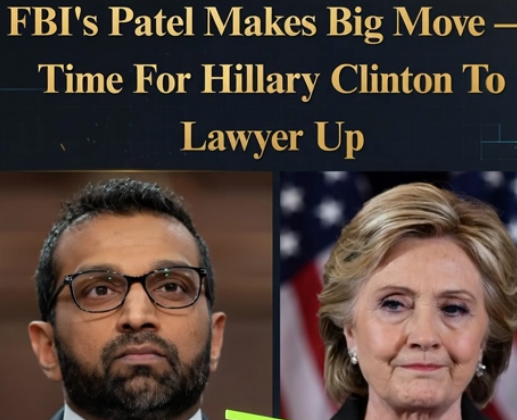
The FBI, under the leadership of new Director Kash Patel, has reportedly launched a sweeping investigation into a decade of activities involving Democratic operatives and the intelligence community. This “grand conspiracy” probe aims to determine if there was a coordinated, multi-year effort to influence three consecutive U.S. elections to the detriment of Donald Trump. According to reports, the investigation could culminate in the appointment of a Special Prosecutor to examine episodes ranging from the Russia collusion narrative to the more recent prosecutions led by Jack Smith. Central to the probe is the potential declassification of two sets of sensitive evidence by President Trump. The first is a classified annex from an inspector general inquiry into Hillary Clinton’s private email server, obtained by Senator Chuck Grassley, which allegedly shows the FBI ignored evidence of misconduct. The second is the “Clinton plan intelligence” found in Special Counsel John Durham‘s final report. These documents are believed to reveal a pattern where the intelligence community suppressed information harmful to Democrats while aggressively pursuing flawed claims against Trump.
The investigation also draws on harsh critiques from former CIA Director John Ratcliffe, who recently accused former CIA Director John Brennan and former FBI Director James Comey of overseeing a “corrupt process.” Ratcliffe asserted that Brennan prioritized narrative consistency over analytical integrity, specifically regarding the use of Christopher Steele’s discredited dossier. These allegations form the backbone of the theory that the intelligence community was weaponized for political purposes starting as early as the summer of 2016. Furthermore, administration officials are looking into claims that the FBI failed to investigate or preserve evidence of China orchestrating fake mail-in ballots during the 2020 election to benefit Joe Biden. To overcome the expiration of various statutes of limitations, Patel’s FBI is treating these disparate events as a continuous racketeering enterprise or conspiracy. This legal strategy allows a Special Prosecutor to link older alleged offenses with more recent actions, effectively extending the window for criminal referrals. Finally, the probe is looking to shift the legal venue away from Washington, D.C., citing the district’s historical political bias. Officials are eyeing Florida as a more viable location for a grand jury, noting that many “overt acts” of the alleged conspiracy occurred there and remain within the statute of limitations. This move follows the dismissal of the Mar-a-Lago classified documents case by a federal judge in Florida, suggesting the administration views the state as a more equitable jurisdiction for this high-stakes inquiry.