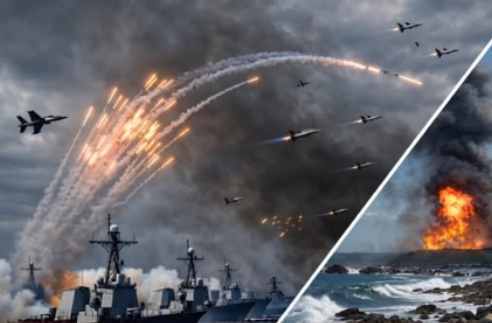
Tensions in the Red Sea have reached a fever pitch following a dramatic maritime confrontation between U.S. naval forces and the Houthi movement. A U.S. destroyer was targeted by a sophisticated saturation attack consisting of 36 missiles, a maneuver designed to overwhelm the vessel’s advanced air-defense systems through sheer volume. This calculated strike represents one of the most serious escalations in the region’s strategic waters in recent months.
During the intense encounter, the warship’s defensive layers successfully intercepted the incoming threats under extreme pressure. Reports suggest that the situation evolved rapidly, with a retaliatory strike occurring approximately 22 minutes later, targeting hostile infrastructure. This quick transition from defense to counter-offense highlights the speed and complexity of modern naval engagements where operational outcomes are decided in minutes. The incident underscores the growing volatility within the Middle East, threatening a critical artery for global trade. As localized conflicts increasingly transform into broader strategic flashpoints, the ability to maintain maritime security in the Red Sea remains a pivotal challenge for international stability and the regional balance of power.