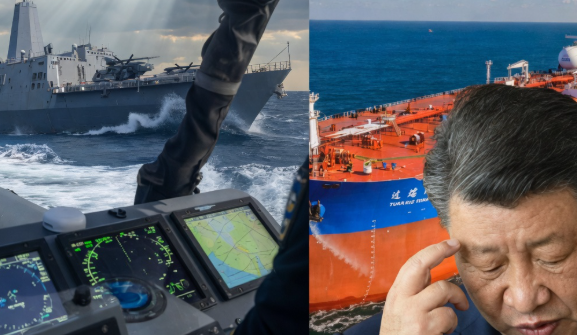
Following the collapse of weekend peace negotiations with Tehran, President Trump reportedly moved decisively on April 13, 2026, to escalate economic and military pressure. Under his direction, the U.S. Navy has established a naval blockade targeting Iranian ports and coastal territories surrounding the Strait of Hormuz. The primary objective of this maneuver is to choke off the regime’s oil export revenues, which are estimated to reach hundreds of millions of dollars per day. By restricting access to these vital waterways, the administration aims to leverage maritime superiority to force a return to the bargaining table regarding nuclear ambitions and regional influence.
The impact of the blockade was felt almost instantly across global energy markets. Real-time shipping data revealed that at least two major tankers bound for China reversed course shortly after the 10 a.m. EDT deadline. The Rich Starry, a Malawi-flagged vessel, and the Botswana-flagged Ostria—both carrying crude oil—reportedly diverted from their paths near the chokepoint after departing Sharjah. While the United States maintains that neutral shipping intended for other destinations will be allowed to pass, the selective targeting of Iranian-linked trade serves as a stark reminder to Beijing of the strategic control the U.S. exerts over the world’s most sensitive maritime arteries. Supporters of the action describe the blockade as a quintessential application of the America First approach, prioritizing national security through a show of force. President Trump has further underscored this stance by warning that Iranian fast-attack boats would be engaged if they approached U.S. forces too closely. This strategy is built on the belief that strength, rather than diplomatic restraint, is the most effective tool for curbing geopolitical tensions. However, observers are urged to treat these developments with caution, as the accounts have yet to receive independent verification from major news agencies or official defense statements. Until corroborated by maritime data and official releases, the long-term efficacy of this high-stakes maritime gambit remains to be seen.