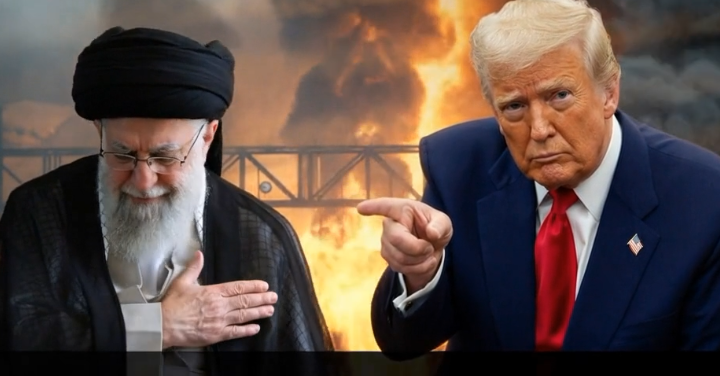
President Donald Trump has publicly confirmed that he personally authorized the military strike that destroyed the newly constructed B1 Bridge in Karaj, Iran. Speaking during a press conference on Monday, the President framed the action as a direct response to Iranian negotiators reneging on a pending conflict-resolution agreement. According to the President, the U.S. negotiating team, led by Vice President JD Vance, alerted him that Iran had backed out of the deal. In a swift display of military force, Trump claimed he gave the order to “knock out” the massive infrastructure project within 45 minutes of the diplomatic breakdown, with the bridge reportedly destroyed just 10 minutes later.
The B1 Bridge was considered one of the most significant infrastructure projects in West Asia and was slated for its grand opening later this year. However, the timing of the strike has sparked international concern, as it occurred during the final day of Nowruz, a major cultural holiday in the region. Iranian sources have reported that civilians were gathered near the site at the time of the explosion. Initial casualty reports suggest at least eight fatalities and approximately 100 injuries, though independent verification from within Iran remains difficult due to restricted access. Trump further amplified the event by sharing footage of the destruction on Truth Social, warning that Tehran must reach a deal before the U.S. targets what remains of the nation’s infrastructure. A sharp divide has emerged regarding the legality and strategic necessity of the strike. U.S. military officials have defended the operation, designating the bridge as a legitimate military target. They argue the structure was a critical artery for Iran to transport weapons and war-making capabilities to its western territories. Conversely, domestic critics, including Democrats and various media outlets, have categorized the act as a potential “war crime.” They cite the Geneva Convention and international laws that strictly prohibit the deliberate targeting of civilian infrastructure. Despite these accusations, Trump remains steadfast, asserting that U.S.-Israeli strikes are nearing their core strategic objectives and have significantly degraded Tehran’s military capacity. In a formal address to the nation, the President signaled a major escalation in the coming weeks, promising to hit Iran “extremely hard” and threatening to target Iranian power plants if compliance is not met. This aggressive stance coincides with a deteriorating situation in the Strait of Hormuz. Reports from Reuters indicate that Iran has rejected all U.S. ceasefire demands, including the requirement to fully reopen the strait to civilian shipping traffic. In retaliation, Tehran has declared it will no longer refrain from striking the infrastructure of its Gulf neighbors, claiming responsibility for recent attacks on ships and Saudi industrial facilities linked to American firms. The diplomatic stalemate is further complicated by Iran’s counter-demands. A senior Iranian official stated that any lasting peace talks are contingent upon the United States and Israel ceasing all strikes, providing guarantees against future aggression, and offering financial compensation for damages. Furthermore, Tehran insists on maintaining control over the Strait of Hormuz and imposing transit fees on international vessels. With a U.S.-imposed deadline set for 8 p.m. Eastern Time, the region remains on the brink of wider conflict. Trump has warned that failure to reopen oil transit through the strait will trigger widespread, large-scale strikes on Iranian bridges and energy grids within hours of the deadline’s expiration.