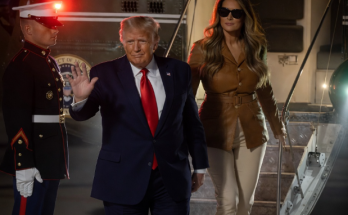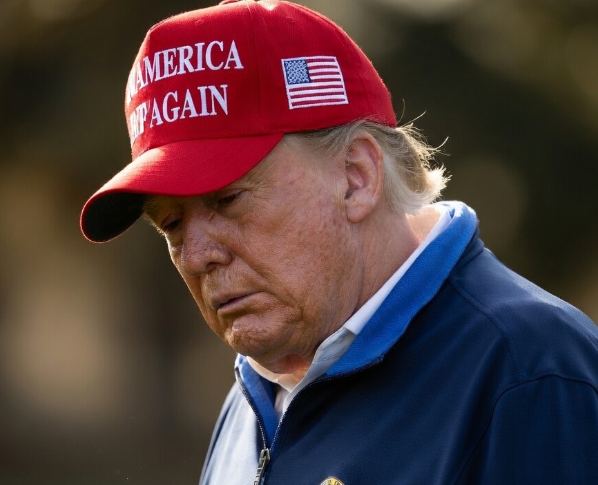
In a recent and stark public assessment, former Secret Service agent Dan Bongino has articulated a series of growing concerns regarding the safety and protective environment surrounding Donald Trump. Drawing from over a decade of operational experience within the elite federal agency, Bongino frames these warnings not as political commentary, but as a professional evaluation of a security landscape that is becoming increasingly volatile. He argues that the protective mission for the former president is currently being besieged by a unique convergence of hostile forces that include international adversaries, domestic radicalization, and internal institutional pressures within governmental agencies. This multifaceted threat profile, he suggests, requires an immediate return to nonpartisan, threat-based operational standards to prevent a potential historical tragedy.
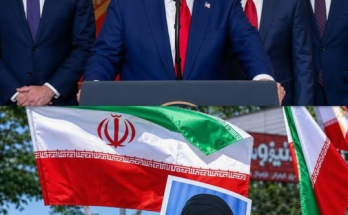
The international dimension of these risks is dominated by the persistent hostility from Iran. Since the 2020 drone strike that resulted in the death of Qassem Soleimani, the Iranian regime has demonstrated a continued resolve to target high-ranking American officials, including Donald Trump. Bongino highlights that Tehran utilizes a combination of direct intelligence assets and sophisticated proxy networks to monitor movements and seek vulnerabilities in protective details. This external pressure is further compounded by the strategic interests of China. As Trump‘s previous policies regarding trade and technological decoupling significantly impacted Beijing‘s global standing, intelligence professionals warn that China remains a motivated actor capable of conducting interference or intimidation operations that could compromise the safety and stability of a former leader with significant political influence.
Domestically, the environment is described as historically unprecedented in its toxicity. Bongino identifies the normalization of dehumanizing rhetoric and public threats as a primary catalyst for potential violence. Research into modern radicalization suggests that when political discourse moves toward the moral permissibility of aggression, the risk of lone-wolf attacks increases substantially. The current legal and political conflicts surrounding Trump serve as force multipliers for these risks, as high-profile investigations and media amplification can provide extremists with both the motivation and the perceived justification to act. In this climate, security professionals must account for the fact that symbols of political power are often viewed as primary targets for individuals seeking to make a violent statement in a polarized society.
One of the most critical aspects of Bongino’s warning involves the Secret Service itself and its institutional integrity. He cautions that the agency’s mandate to prioritize objective, threat-based assessments is under threat from a security culture increasingly influenced by political optics and bureaucratic pressure. If resource allocation or the visibility of protection is swayed by partisan hostility rather than intelligence, the effectiveness of the protective mission is fundamentally compromised. Bongino points to the history of the United States, specifically the assassinations of Abraham Lincoln, James Garfield, and John F. Kennedy, as proof that inadequate attention to credible intelligence or mismanaged resources can have catastrophic results. He argues that the preservation of institutional neutrality is essential for maintaining the credibility of federal protection programs.
The digital age has also introduced new layers of complexity to threat management. Modern extremist networks utilize online platforms for rapid coordination and the dissemination of radicalizing content, allowing threats to manifest with minimal oversight. Bongino emphasizes that protective measures must now bridge the gap between physical and digital threat vectors, requiring advanced intelligence integration and constant technological adaptation. Furthermore, the psychological dimension of security cannot be ignored; when a high-profile figure is perceived as vulnerable—whether through publicized legal battles or political maneuvering—it can embolden hostile actors. Managing these perceptions through discreet, data-driven strategies is vital to reducing the sense of opportunity that drives potential attackers to transition from rhetoric to action.
Ultimately, Bongino’s perspective underscores that the protection of Donald Trump is a test of the United States‘ constitutional resilience. He calls for a holistic, nonpartisan approach to security that transcends individual policy disagreements or party affiliations. This involves reinforcing interagency communication across federal, state, and local levels to ensure that protective protocols remain standardized and insulated from ideological drift. By focusing on continuity, preparedness, and operational discipline, governmental agencies can fulfill their mission to safeguard national stability. The broader public and political institutions, in turn, share a responsibility to support these professional measures, recognizing that the cost of failure is a catastrophe that the nation cannot afford to risk.