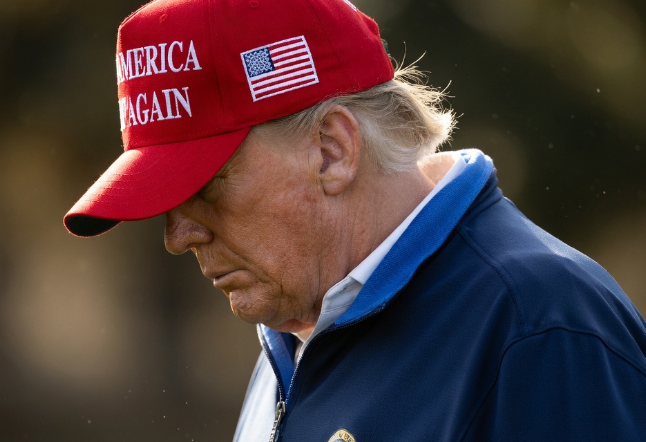
The political landscape in Washington D.C. has undergone a seismic shift following President Donald Trump’s strategic decision to appoint Dan Bongino as the Deputy Director of the Federal Bureau of Investigation (FBI).
A former Secret Service agent and influential media commentator, Bongino brings a hard-line ideology to the administration’s handling of the intelligence community. His ascent is viewed by supporters as a long-awaited reckoning against an entrenched federal bureaucracy, which Bongino has frequently characterized as the “deep state.” This transition from media firebrand to a high-ranking official suggests a significant targeting of career officials involved in previous high-profile investigations. A primary driver behind this appointment is Bongino’s long-standing public conflict with Senator Adam Schiff. Bongino has repeatedly leveled accusations against Schiff for allegedly orchestrating the “Russia collusion hoax” intended to undermine the Trump presidency. This friction is further intensified by Joe Biden’s preemptive pardon of Schiff regarding his activities on the House January 6th Committee. While allies of Trump interpret this pardon as a shield against legal accountability, Bongino’s new authority empowers him to conduct extensive internal audits of the FBI, specifically targeting politically sensitive investigations to eliminate perceived partisan bias. Establishment figures, including Rep. Bennie Thompson and Liz Cheney, have reacted with sharp criticism, characterizing the appointment as an attempt to weaponize law enforcement for partisan retribution. Conversely, the Trump administration describes the move as essential “house-cleaning” aimed at restoring integrity and dismantling bureaucratic inertia. As the FBI undergoes this dramatic restructuring, the bureau moves away from its traditional apolitical image. This era marks the agency’s emergence as a central battlefield in American political strategy, where the legal interplay between executive pardons and federal investigations may eventually require a definitive ruling from the Supreme Court, forever altering the agency’s role in the national framework.