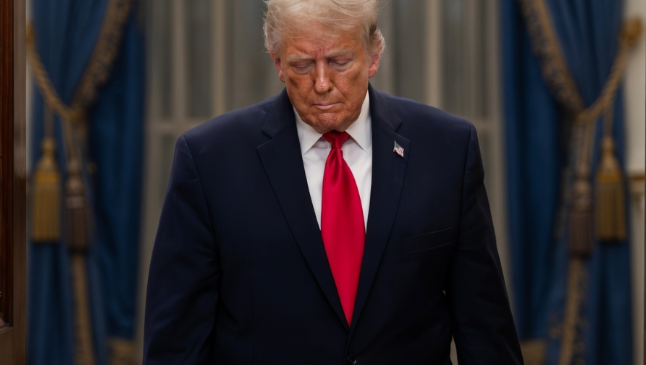
President Donald Trump has dramatically escalated military tensions in the Middle East, issuing a final 48-hour ultimatum to Iran to either reopen the Strait of Hormuz or finalize a ceasefire agreement.
This strategic maritime artery, responsible for a significant portion of the world’s oil supply, was closed by Tehran in retaliation for recent U.S.-Israeli strikes. Writing on Truth Social, the President warned that “all Hell will reign down” should the deadline pass without compliance, reiterating a previous 10-day warning issued on March 26 that had initially postponed attacks on Iran’s energy infrastructure. The recent surge in hostilities follows the downing of two U.S. aircraft by Iranian forces on Friday. In a late-night announcement, Trump confirmed that a high-stakes rescue mission had successfully recovered all personnel, including a weapons officer aboard an F-15E Strike Eagle fighter. Once the final airman was safe, the President’s rhetoric shifted toward specific threats against domestic targets. He characterized the upcoming Tuesday as “Power Plant Day” and “Bridge Day,” vowing to “obliterate” the nation’s energy grid and transportation networks if the Hormuz chokepoint remains blocked. Strategic analysts, including Mick Ryan of the Lowy Institute, have praised the technical proficiency of the U.S. military in executing the recovery of the downed pilots under duress. Ryan, a retired major general in the Australian Army, noted that the integration of the U.S. Air Force and Army Special Forces underscores a unique capability that “no one in the world” can replicate. Despite this tactical success, the global energy market remains highly volatile. The international community now watches as the 48-hour window closes, with Trump insisting that Iran must yield or face unprecedented devastation to its core infrastructure.