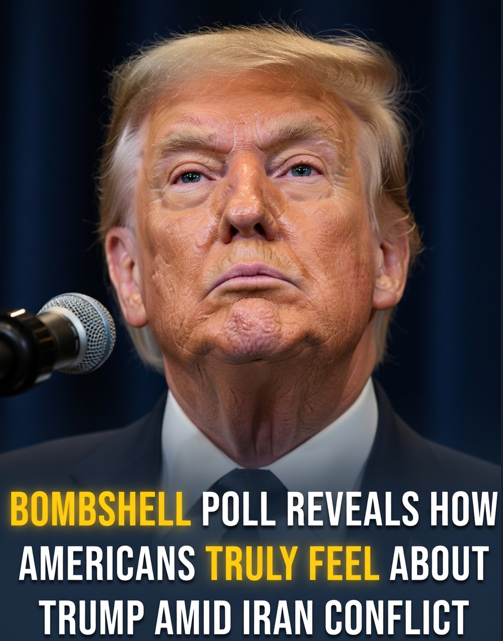
Donald Trump’s recent military action targeting Iran has sparked intense debate across the United States, highlighting deep divisions over the president’s approach to foreign policy and national security. The airstrikes carried out by the United States and Israel over the past week have drawn criticism from political leaders, media commentators, and members of the public, raising questions about the strategic goals of the operation and its potential long-term consequences.
Some of the criticism has come from figures traditionally aligned with Trump’s political movement. Conservative commentator Tucker Carlson strongly condemned the strikes, describing the decision as “absolutely disgusting and evil.” Carlson warned that the move could reshape political dynamics within Trump’s base and alter perceptions of his leadership among supporters. “Trump’s latest decision is going to shuffle the deck in a profound way,” he said, reflecting growing unease among certain conservative voices regarding escalating tensions in the Middle East.
Pro-Trump podcaster Tim Pool also expressed concern, arguing that the administration’s approach did not align with the principles many voters expected when Trump campaigned on a more restrained foreign policy. Similarly, conservative influencers Keith and Kevin Hodge criticized the administration in a social media post, writing that intervening to “free the people of Iran is not why I voted for Trump.” Their remarks highlight disillusionment among some segments of Trump’s core constituency.
Democratic lawmakers have also voiced opposition to the strikes, warning that expanded military operations could increase the risk of a broader regional conflict. The debate reflects longstanding divisions in Washington over the role of the United States in foreign interventions.
Trump, however, has suggested that the conflict may not escalate significantly. When asked about the possibility of deploying U.S. ground troops to secure Iran’s stockpiles of highly enriched uranium, the president indicated that no such decision has been made. “We haven’t made any decision on that. We’re nowhere near it,” Trump told the New York Post, signaling caution while leaving the possibility open.
Public opinion appears largely skeptical of deeper military involvement. A recent survey cited by The Hill found that 74 percent of Americans oppose sending U.S. ground troops into Iran, while only 20 percent support such a move. The results reflect widespread concern about repeating the prolonged military engagements seen in Iraq and Afghanistan.
Political analysts note that the debate could carry significant implications as midterm elections approach. Public attitudes toward foreign policy, particularly decisions involving military force, may influence voter behavior and shape the broader political landscape.
At the same time, domestic issues remain at the forefront for many Americans. Polling shows that the cost of living, government spending, and job availability rank among the public’s top concerns, illustrating that voters are evaluating foreign policy decisions alongside pressing economic challenges.
As the situation unfolds, Trump’s handling of Iran will likely remain a focal point of national discussion. Supporters argue that the strikes demonstrate decisive leadership in protecting U.S. interests, while critics warn that the move risks escalating tensions in an already volatile region. The outcome of this debate may play a significant role in shaping both Trump’s political legacy and the direction of U.S. foreign policy.