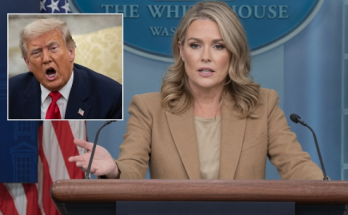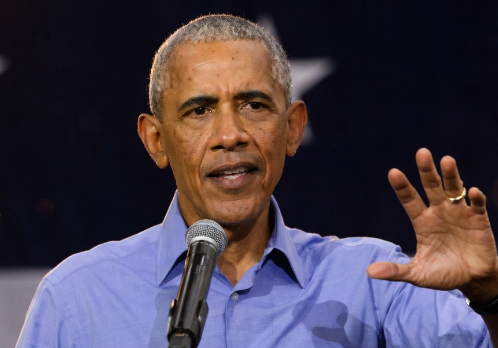
President Donald Trump and Defense Secretary Pete Hegseth have launched a pointed rhetorical offensive against former President Barack Obama, accusing his administration of providing Iran with significant financial resources that bolstered the regime’s military capacity. These criticisms emerge during a period of extreme volatility in the Middle East, where the United States and Israel are engaged in a sustained campaign to degrade Tehran’s strategic capabilities following renewed concerns over nuclear weapon development.
During the FII PRIORITY Summit, Trump revisited his long-standing grievances regarding the 2015 nuclear deal. He focused specifically on a $1.7 billion cash payment delivered via aircraft, framing it as a controversial exercise of executive authority that empowered a “hostile regime.” While Obama officials previously justified the payment as a necessary legal settlement for an unfulfilled 1979 arms contract, Trump argued that the influx of liquid capital allowed Iran to advance its regional ambitions. He asserted that his decision to exit the Joint Comprehensive Plan of Action (JCPOA) was the primary factor in preventing a nuclear-armed Tehran. Defense Secretary Pete Hegseth amplified these concerns during a Cabinet meeting, criticizing the media for failing to scrutinize the lasting impact of the settlement. Hegseth also raised alarms regarding Iran’s evolving missile technology, citing a recent incident where two missiles were launched toward a distant target. While the missiles failed to hit their mark, Hegseth suggested the test proves Iran’s reach may be greater than previously acknowledged, posing a direct threat to U.S. allies. This debate highlights the sharp polarization within Washington regarding the effectiveness of diplomacy versus military pressure in managing Iranian influence.