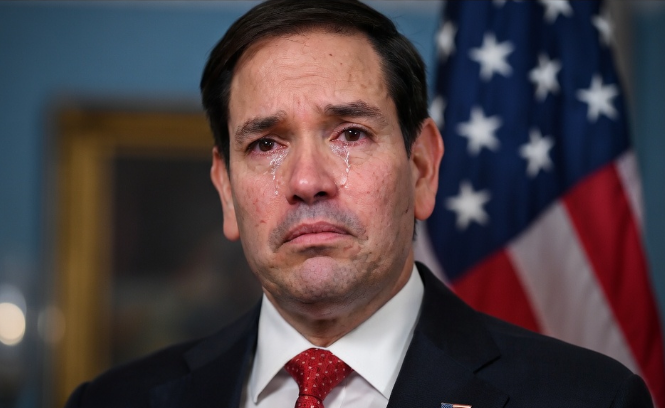
In a move that underscores a tightening grip on national security protocols, the U.S. State Department has terminated foreign service officer Daniel Choi. The dismissal, ordered by Secretary of State Marco Rubio and authorized by President Donald Trump, follows an internal review triggered by a hidden-camera investigation. Choi was caught on film admitting to a clandestine romantic relationship with a Chinese national whose father is a high-ranking member of the Chinese Communist Party (CCP)—a connection he intentionally failed to disclose to security officials.
The controversy emerged after the O’Keefe Media Group (OMG) published undercover footage in which Daniel Choi confessed, “I defied my government for love.” In the recording, Choi acknowledged that his girlfriend’s father held a significant position within the CCP structure, possibly as a provincial or federal education minister. More alarmingly, Choi admitted on camera that his partner “could have been a spy,” yet he chose to bypass mandatory reporting requirements for close personal contact with foreign nationals to maintain the relationship. This termination represents the first official application of Executive Order 14211, a new directive signed by President Trump aimed at increasing accountability within the diplomatic corps. The order emphasizes that all officials must operate under the President’s direction and that any failure to faithfully implement or adhere to U.S. foreign policy and security standards is grounds for immediate separation. Department spokespeople noted that Choi’s actions were a clear violation of long-standing protocols designed to protect personnel from foreign coercion or compromise. Counterintelligence experts have highlighted this case as a prime example of the “romantic vector” often exploited by Beijing to gather sensitive information. Intelligence officials argue that unreported relationships with individuals tied to hostile governments represent massive vulnerabilities, regardless of the officer’s intentions. By failing to report his Chinese national contact, Choi bypassed the vetting processes intended to mitigate risks of espionage and influence operations within the United States government. Under Secretary Marco Rubio, the State Department has adopted an increasingly hardline stance toward Chinese influence, implementing stricter vetting for personnel in East Asia and sensitive policy roles in Washington. This high-profile firing signals a zero-tolerance policy for security breaches as the administration seeks to harden the U.S. against foreign intelligence threats. Beyond the immediate security implications, the swift disciplinary action has also fueled political speculation regarding Rubio’s rising profile and potential future on a 2028 presidential ticket with Vice President JD Vance.