What first appeared to be another alarming aviation incident at LaGuardia Airport has gradually revealed a far more profound story—one shaped not only by chaos and tragedy, but by extraordinary courage and a deeply personal farewell that has resonated far beyond the headlines.
In the early moments, the situation seemed almost routine. It was serious, but not unprecedented. Only as more details emerged did the full weight of those final seconds become clear, along with the human stories behind them.
Passengers aboard the Jazz Aviation flight described an approach that felt completely normal—until it suddenly wasn’t. Rebecca Liquori, who was seated near an emergency exit, recalled how quickly calm turned into fear.
“The pilot was trying to brake to slow the plane down, and it made a huge grinding noise,” she said.
Seconds later, the impact came.
“We got jolted forward… everyone was screaming.”
In the aftermath, as passengers struggled to comprehend what had happened, one realization began to settle in: the crew had done everything they could.
“They did everything they could to save us—and they didn’t save themselves.”
Another passenger, Joe Capio, echoed what many would later say.
“They saved everybody on that plane. They are honestly heroes.”
While public attention focused on the cockpit and the crew’s final actions, a quieter and more intimate story began to emerge.
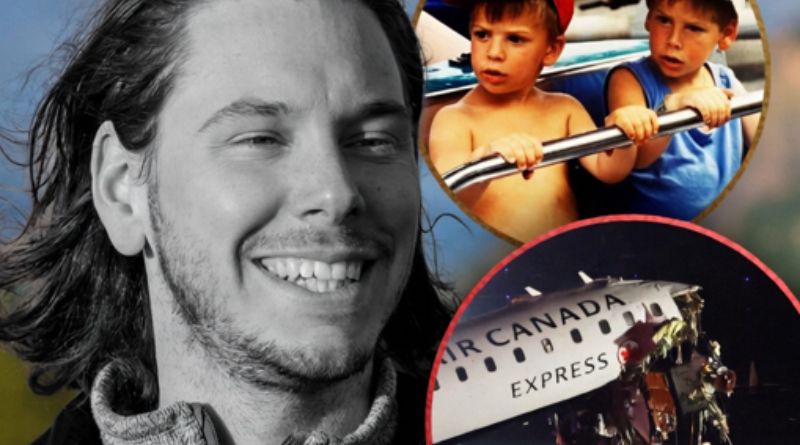
One of the pilots was later identified as Antoine Forest. His name quickly became more than an official detail when his brother, Cédric Forest, shared a heartfelt message online.
Accompanied by a childhood photo of the two brothers, he wrote: “Have a safe flight, my brother… we’ve said that so many times, but this time will be the last. Gone too soon to say goodbye. I love you… you can leave with your head held high.”
The image struck a powerful contrast—two children frozen in a moment untouched by time, long before responsibility, before aviation, and before the decisions that would ultimately define everything.
As investigators pieced together the timeline, a clearer and more troubling picture emerged. Recordings from air traffic control captured the final minutes leading up to the collision, revealing how a routine issue quickly escalated.
The situation began late on March 22, when an Air Canada flight declared an emergency after flight attendants reported feeling ill due to a strange odor in the cabin.
“Flight 2384 is declaring an emergency… we need any available gate,” a transmission stated.
What followed was a series of complications. No gate was immediately available, and communication between teams grew increasingly urgent.
“Do you have any gate? They need to get out.”
Contingency plans were discussed, including the possibility of evacuation, but the crew chose to wait while conditions remained uncertain.
In the final moments, communication became more chaotic.
“Do you have a gate available?”
Then, a chilling sequence:
“Truck 1…”
“Truck 1, stop.”
What happened next is not fully captured in the recordings—but the outcome was devastating.
“There’s an incident on the field.”
Operations halted immediately. The airport shut down as confusion turned into shock.
Officials later confirmed that the aircraft, arriving from Montreal, carried 72 passengers and four crew members. Both pilots lost their lives, while dozens of passengers were taken to hospitals, most later released. Two personnel in the ground vehicle were also seriously injured.
For many travelers, the experience was deeply unsettling. Flights were delayed, terminals filled with uncertainty. One passenger described the fear of realizing how close they had come to a similar fate.
In the end, what remains is more than a timeline of events. It is a story of a routine night that unraveled in minutes—and of decisions made in seconds that saved lives.
Above all, it is a reminder that behind every headline is a human story—one of courage, loss, and the enduring power of love.