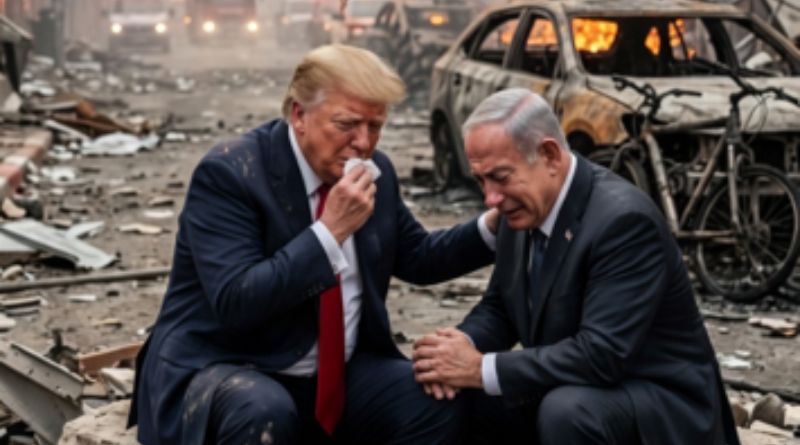
In a significant escalation of tensions in the Middle East, Iran launched a series of ballistic missiles toward Tel Aviv, reportedly equipped with cluster warheads. Iranian officials described the attack as a direct response to the assassination of a senior Iranian security official, which they attribute to Israeli forces. The strikes illuminated the night sky over central Israel, causing visible damage to infrastructure and resulting in the deaths of at least two civilians. The reported use of cluster munitions has raised alarm among humanitarian observers, as such weapons disperse multiple submunitions over a wide area, leaving behind unexploded ordnance that can pose long-term dangers to civilian populations.
This missile barrage is part of a broader and rapidly intensifying conflict that has unfolded since early 2026. Iran has conducted multiple operations targeting Israeli cities, as well as U.S. military bases and allied installations across the Gulf region, including locations in Kuwait, Bahrain, the United Arab Emirates, and Saudi Arabia. These actions follow a string of high-profile assassinations of Iranian officials, which Tehran has vowed to avenge through sustained military responses. In turn, Israel and the United States have carried out airstrikes داخل Iran, focusing on military facilities and elements of its nuclear infrastructure. These developments highlight not only the deepening confrontation but also subtle differences in strategic priorities between Washington and Tel Aviv.
Israel’s missile defense network, including systems such as Iron Dome and Arrow-3, has intercepted a substantial number of incoming threats. However, the sheer volume of missiles and the reported deployment of cluster-type payloads have complicated defense efforts, increasing the risk of damage and casualties on the ground. Civilians on both sides of the conflict continue to bear the brunt of the violence, as reports of injuries, fatalities, and destruction steadily rise.
The repercussions of this escalation are being felt far beyond the immediate region. Global energy markets have reacted sharply, driven by fears of disruption to critical Gulf infrastructure and supply routes. At the same time, international concern is growing as diplomatic efforts struggle to keep pace with the rapidly evolving situation. With both Iran and Israel signaling their readiness to continue military operations, the region remains on edge, facing a period of profound uncertainty and the looming threat of further escalation.